EV Mythbusting


ELECTRIC VEHICLES,
DEBUNKED
ELECTRIC VEHICLES, DEBUNKED
FACT-CHECKING COMMON MYTHS ABOUT ELECTRIC CARS

Cars currently account for a sixth of all of Europe’s emissions, and unlike other sectors, these emissions are not dropping over time. EVs remain the most effective solution for reducing pollution and CO2 emissions. They also save you serious money when charged with mostly locally-generated energy. However, despite all the positives, there is still some confusion and misunderstanding surrounding this technology.
When considering whether to buy an electric car, you might have come across one or two myths about EVs. Perhaps without realising it. We analysed over 20,000 comments on YouTube and TikTok videos about EVs to identify the most common misconceptions. So let’s clear the air.
ARE ELECTRIC CARS WORSE FOR THE ENVIRONMENT THAN COMBUSTION ENGINE CARS?
ARE ELECTRIC CARS WORSE FOR THE ENVIRONMENT THAN COMBUSTION ENGINE CARS?
Over their lifetime, EVs emit between three and four times less than cars with combustion engines (ICE). Although they emit nothing from the tailpipe, it’s true that producing EVs is more emission intensive than producing combustion cars due to the production of the battery. However, the emissions from the electric car mostly flatline after that.
Ev… how long does it take to “pay off” it’s carbon footprint?! Where does the electric come from?!
Even if a large proportion of the electricity used by an EV comes from coal, it will still be responsible for significantly fewer emissions than burning fuel. Today’s cleaner power grid also plays a big role in reduced climate impact from EVs. In 2025, close to half of the EU's electricity came from renewable sources like solar, wind, and hydro. This is local energy that doesn't have to be imported from conflict regions, like oil and gas.
The EU regulation allowing only new EVs to be registered from 2035 would reduce CO₂ emissions by 82% in 2050 compared to 2015. However, electrification alone cannot deliver net-zero transport. A shift towards public transport and active mobility is also necessary, as is the phasing out of ICE vehicles still on the roads after 2035.
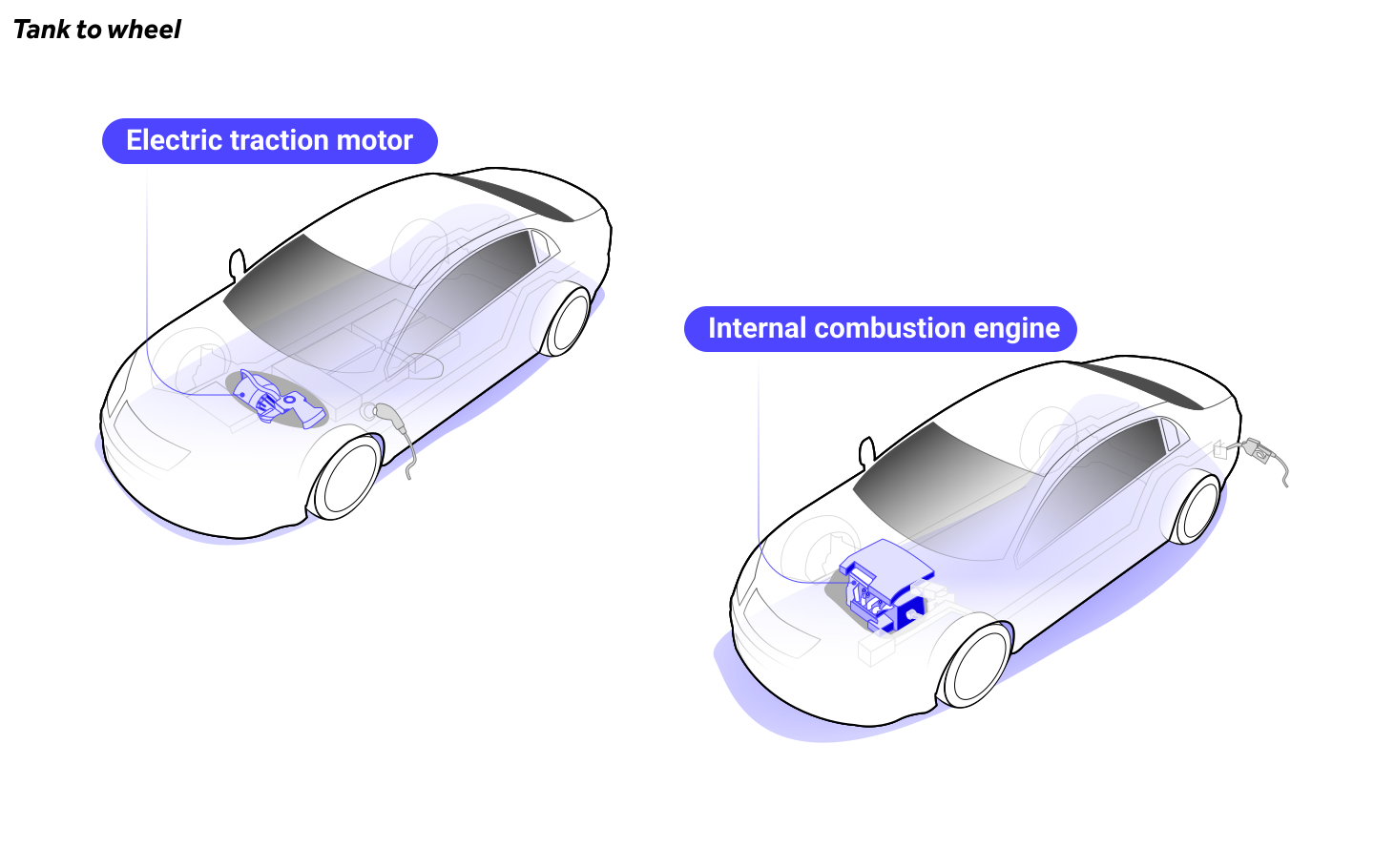
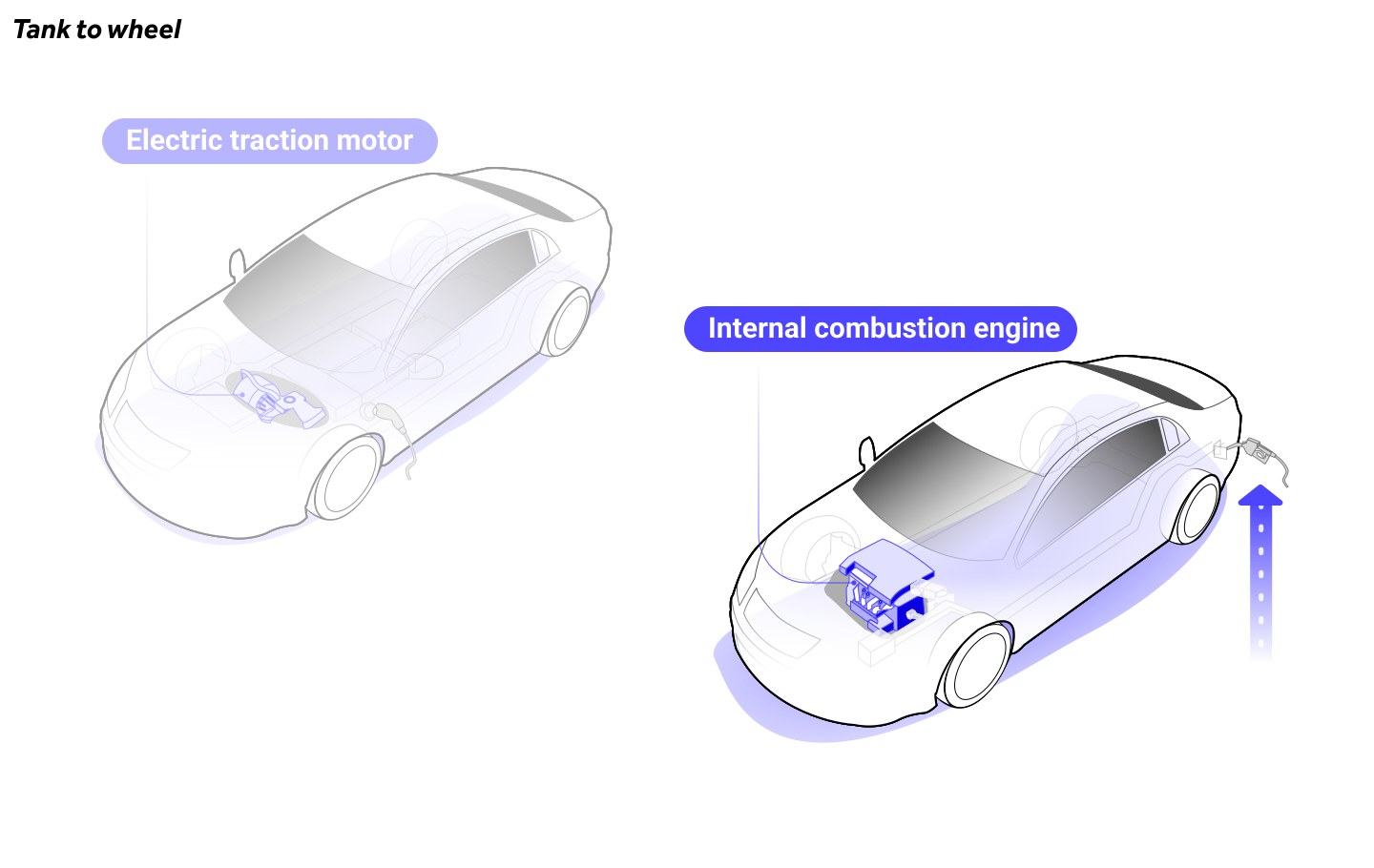
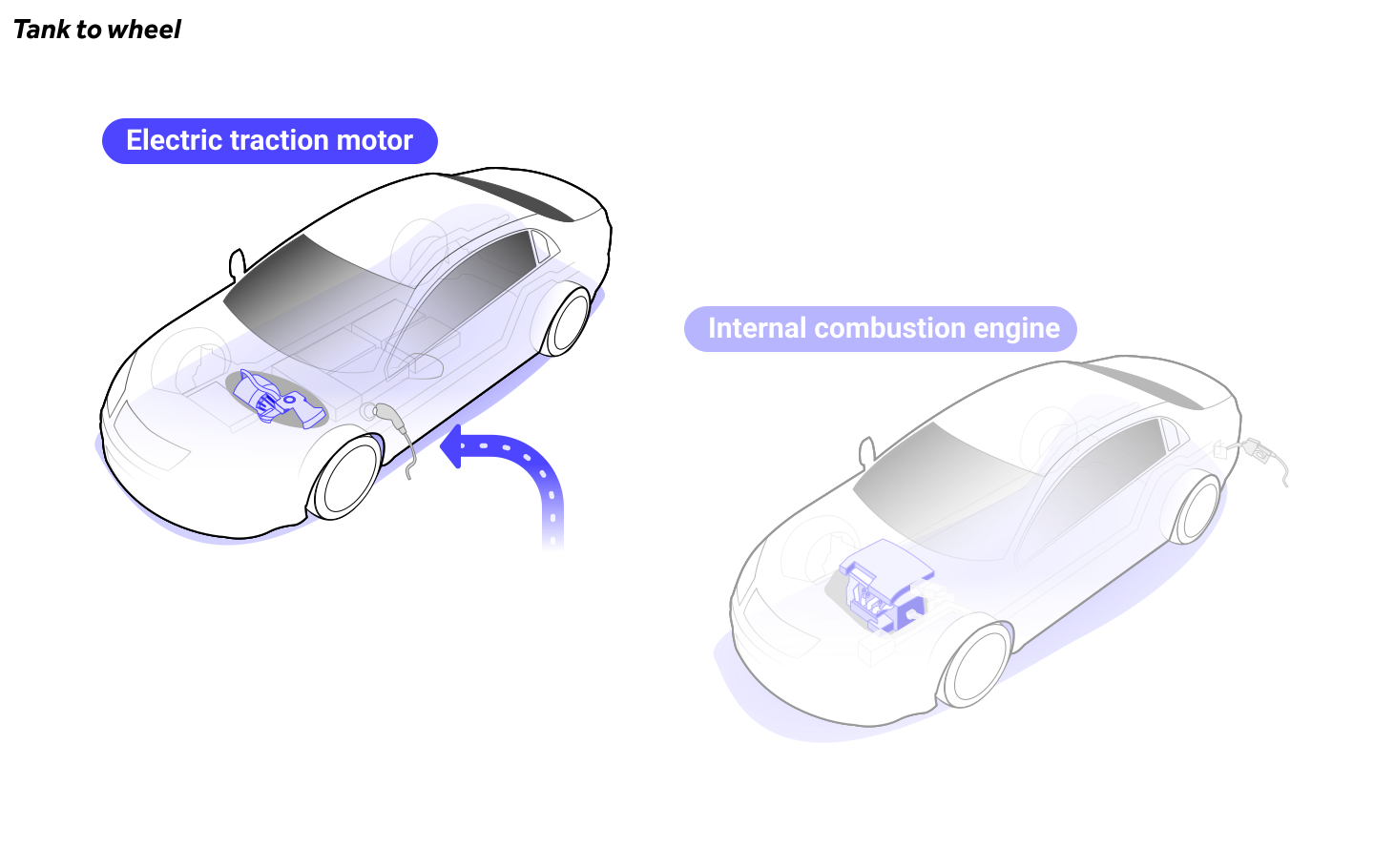
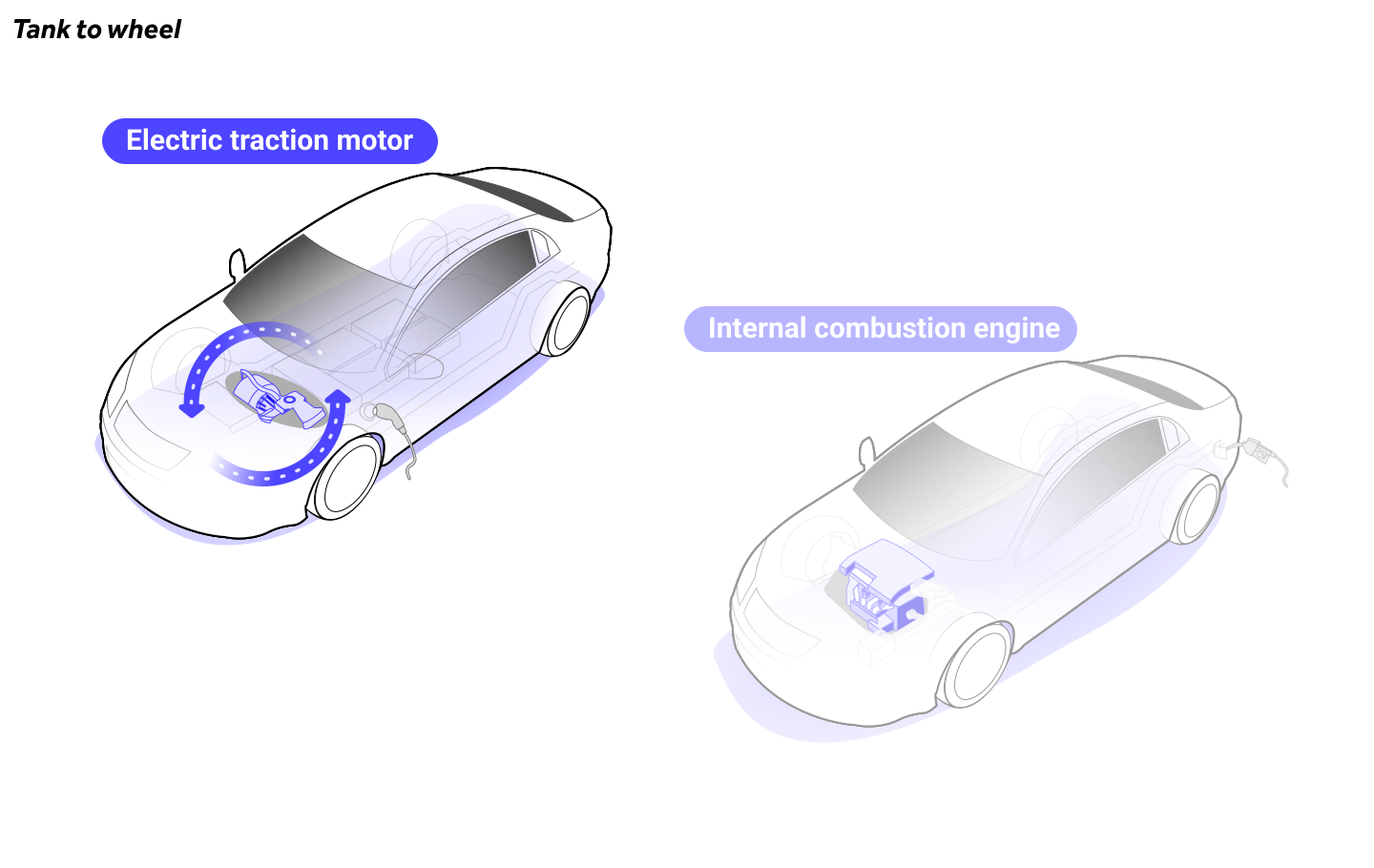
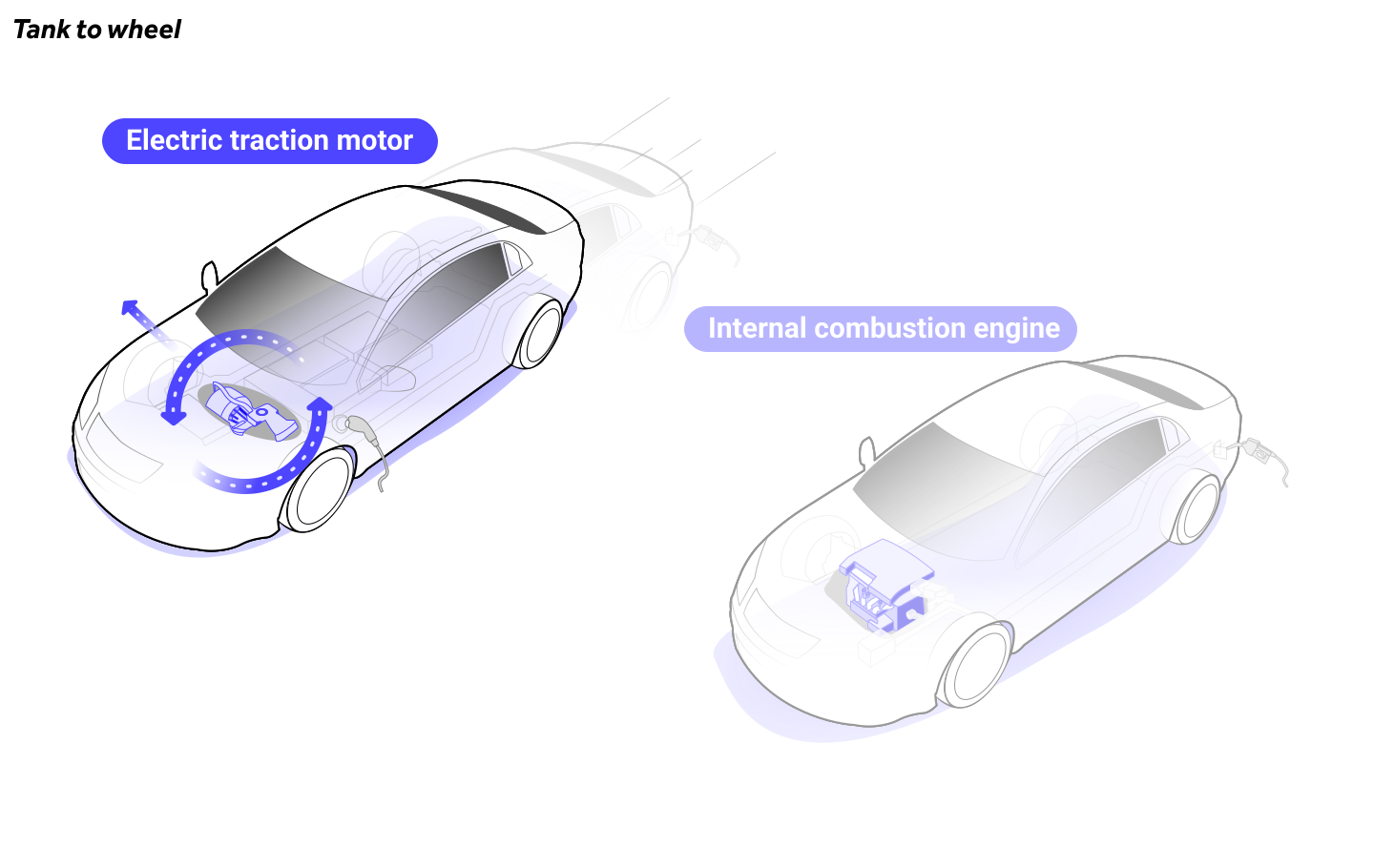
The type of powertrain determines how energy is used to propel the car forward, as well as how much energy is required.
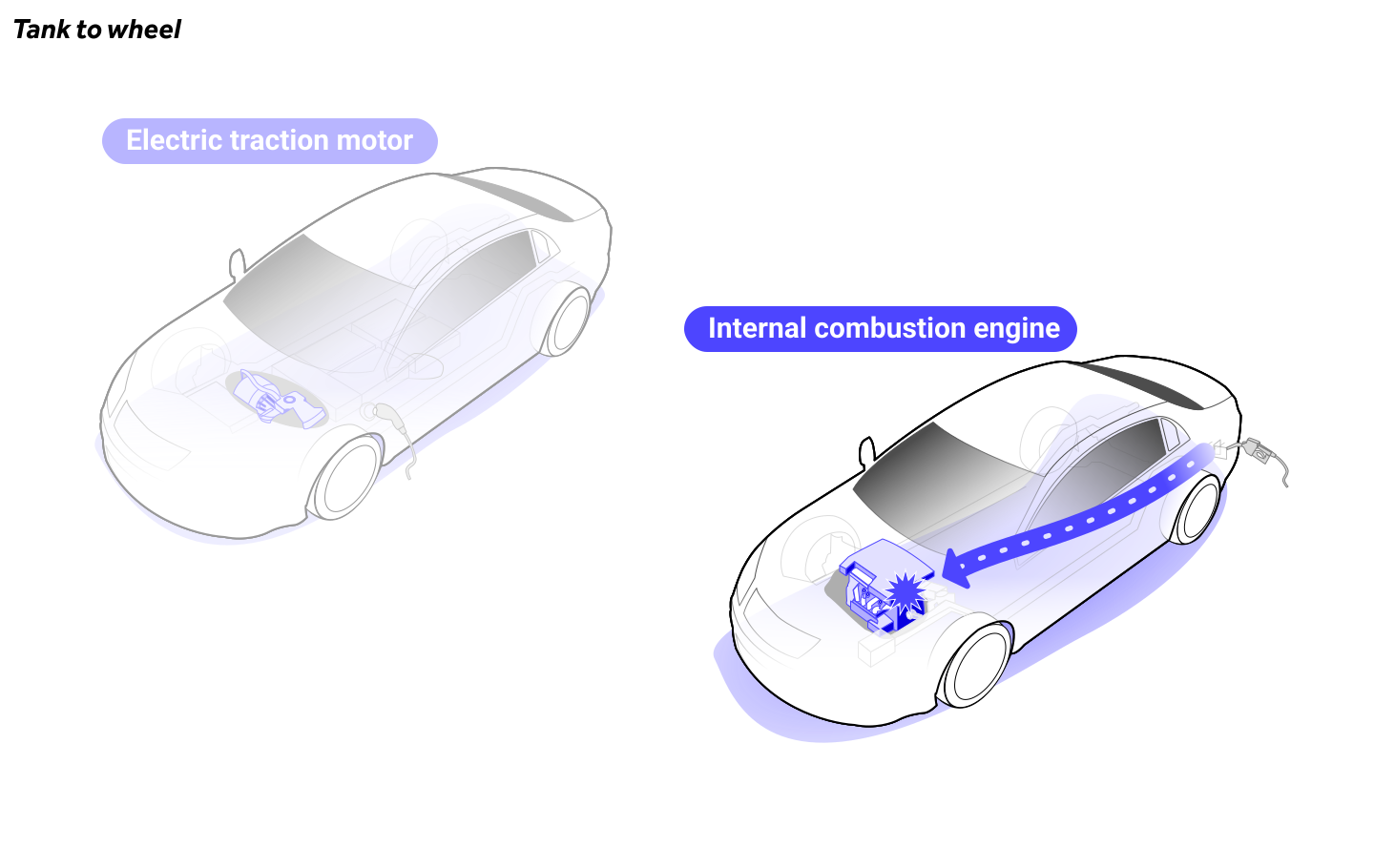
In the internal combustion engine, energy comes in the form of diesel or gasoline and is burned.
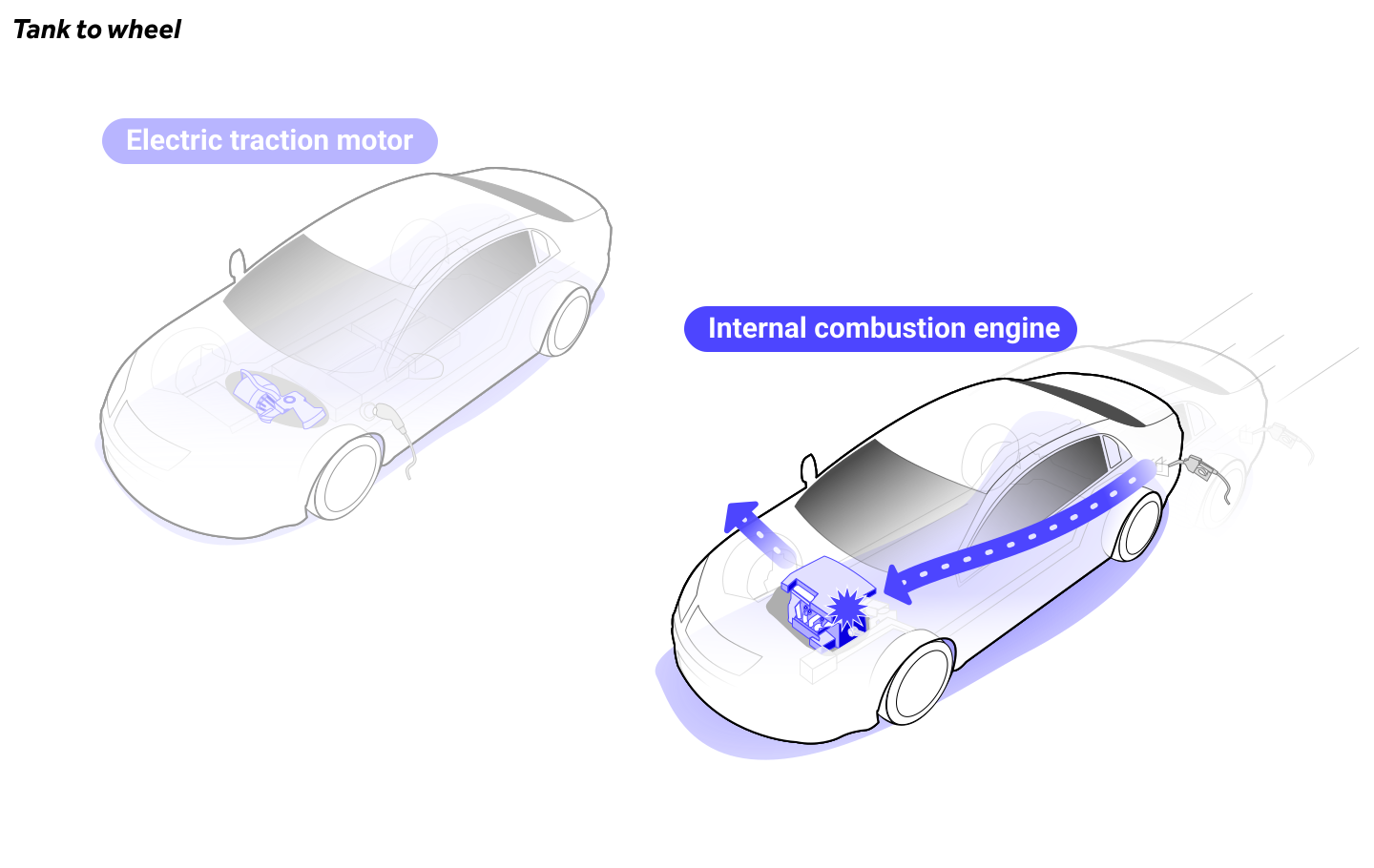
The combustion generates a force that creates the mechanical motion.
Each step in the cycle leads to energy loss, mostly as heat.
Energy arrives in the EV as electricity and is stored in the battery.
The electric motor converts the electric energy into movement using magnetic force.
It's a much more efficient process with no combustion and very little friction, so far less energy is wasted along the way.
CAN ELECTRIC CAR BATTERIES BE RECYCLED?
CAN ELECTRIC CAR BATTERIES BE RECYCLED?
Unlike combustion engines, EV batteries are evolving constantly and already have a longer lifetime than a few years ago. They are also part of a circular economy loop. The materials needed to build a battery can be reused and recovered to produce more batteries. By 2030, significant amounts of these resources could come from locally recycled batteries. However, Europe’s recycling industry needs political support to grow and is reliant on a strong European battery value chain.
All the Batteries at end of life have to go to land fill only one element of them is recyclable the rest is land fill same with solar panels Etc [...]
Recycling elements of a battery


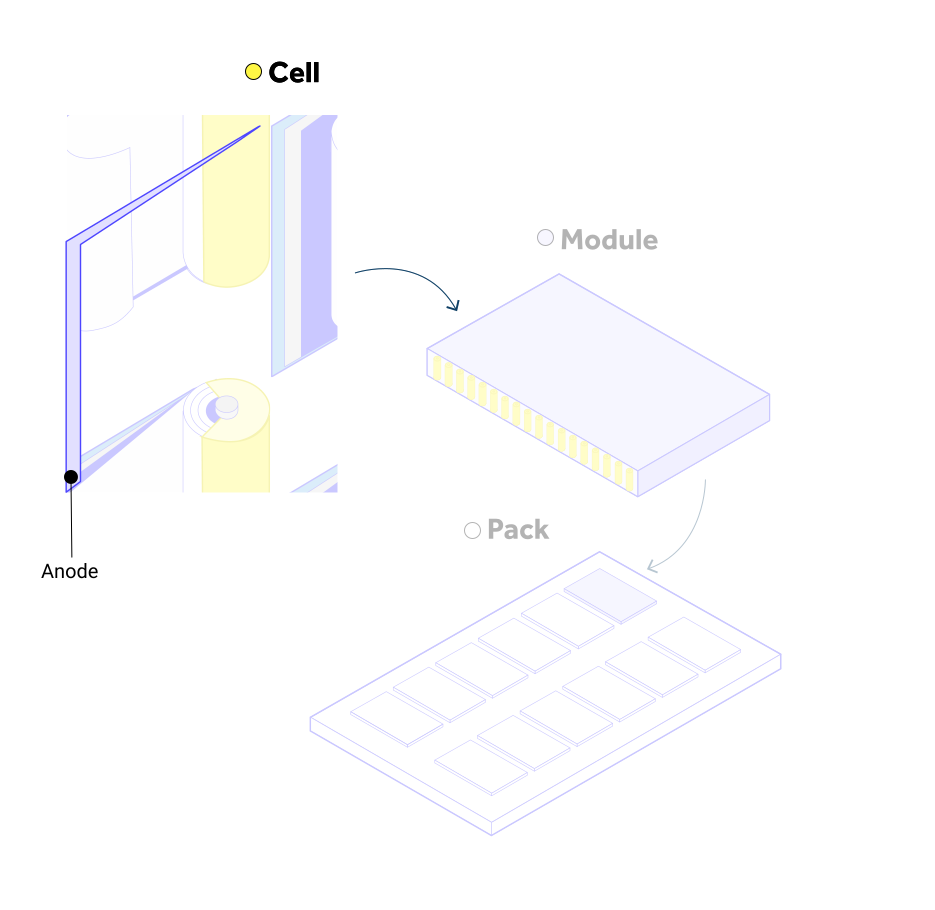


70% of a typical EV battery will be recycled by 2030, with even more possible in the future.
Critical minerals, such as nickel and lithium, are recovered from the cathode before re-entering the battery manufacturing process.
Graphite and copper are recovered from the anode.
Electrolyte solvents can be recovered from the separator, however the practice is not yet used at scale.
90-95% of aluminium and steel can be recovered from the battery pack.
DO EVs CATCH FIRE MORE OFTEN THAN COMBUSTION ENGINE CARS?
DO EVs CATCH FIRE MORE THAN COMBUSTION ENGINE CARS?
Regardless of its power source, any car could catch fire under extraordinary conditions such as severe accidents or mechanical failures.
Studies from across the globe conclude that EVs are actually far less likely to catch fire than cars powered by petrol or diesel. The Swedish Civil Contingencies Agency (MSB) shows that petrol and diesel vehicles were almost 20 times more likely to catch fire than EVs.
EVs and their batteries are designed to reduce fire risks and kept under specific safety standards. Unlike ICE they don't have hot exhaust systems that are susceptible to leaks or failures.
Petrol or diesel fires 1 in a million, EV fires 1 in 1000, Ratios are truth tellers. And this was just a example but a clever person can see.
Batteries have fire protection features built in to them
An EV battery has different layers with fire protection materials. These materials have a strong resistance to fire.
The enclosure has a fire protection layer within it, as well as thermal isolation and fire protection on the outside protection.
Between the cells, there is also thermal and electrical insulation and fire protection.
Underneath, the cold plate carries the cooling system that keeps the battery pack in a safe temperature.
In the case that there is a fire, the battery is built so that it is contained inside the battery, or at least is delayed from spreading as long as possible so passengers have time to exit the car.
There are lots more steps that are taken to ensure that EVs are very unlikely to catch on fire. This includes ensuring product robustness and quality control in manufacturing.
Although EVs have a lower fire risk than internal combustion cars, the extended and dramatic nature of burning EVs has fuelled widespread misinformation. What is true, is that battery fires demand specialised suppression techniques, as they behave fundamentally differently from fuel fires. That means the primary challenge posed by EV fires is ensuring that first responders are adequately trained to handle them.
WILL I BE ABLE TO FIND A CHARGING STATION DURING A LONG JOURNEY?
WILL I BE ABLE TO FIND A CHARGING STATION DURING A LONG JOURNEY?
With 1.1 million public charge points across the EU by the end of 2025 – a fivefold increase since 2020 – finding a plug on the road is easier than ever. This rapid expansion was largely driven by the EU’s Alternative Fuels Infrastructure Regulation (AFIR). The next revision of AFIR should focus on the driver experience: transparent pricing, operator overview, and reliable real-time availability data.
..nightmare them charging points 🤦♀️give me a headache just watching you just trying to charge the EV 🤪 nightmare😱
Now that the public charging infrastructure is well developed, attention is turning to people's homes. Studies have shown that private access to a charging station is the most important factor for people to switch to electric.
Plug an EV into a home solar setup, and it can turn into a battery on wheels. Through vehicle-to-grid (V2G) and vehicle-to-home (V2H), the car absorbs any surplus and feeds power back during peak demand. This technology stabilises the grid while cutting household energy costs.
ARE ELECTRIC CARS MORE EXPENSIVE TO RUN?
ARE ELECTRIC CARS MORE EXPENSIVE TO RUN?
Recent geopolitical volatility has only cemented the economic advantage of EVs: they are now decisively cheaper to own and operate than their petrol and diesel counterparts. Even prior to energy cost shocks, small and mid-sized EVs held a lower Total Cost of Ownership (TCO), including the total cost of buying, using and maintaining the car over its lifetime.
Although EVs are often more expensive upfront than cars with combustion engines, this price difference is narrowing. Falling battery costs, coupled with EU emissions targets that encourage car manufacturers to increase production, are bringing a range of affordable models to the market.
Almost eight out of ten EU citizens buy their car second-hand. As adoption rises among private buyers – and crucially, corporate fleets – this primary demand will feed a steadily growing supply of affordable, used EVs for the secondary market.
I wouldn't touch an ev with a barge pole. Expensive to run, can't go much distance without needing to be charged, far more expensive than a diesel car to run. I'll stick to motorcycles
Price to drive 100km in Germany
Price of household electricity is from July 2026. Other prices are from first week of October 2026
 = €1
In a world reshaped by energy volatility, clinging to fossil fuel dependency is not an act of caution; it is a liability. EVs offer cleaner air, lower total ownership costs and greater energy resilience. Hesitant politicians and slow-moving manufacturers need to recognise: the consumer shift is already happening, the future is undeniably electric.

Contributors
Design and visualizations
Cristina Pita da Veiga | Federica
Pasquini
Script and video production
Megan Corsano
On camera
Lucien Mathieu
Text
Tomma Wagner
Data and research
Laurence Peplow | Nele Pärje | Yoann Gimbert | Emily Ritchey | Juliette
Desoubeaux
Methodology and sources
We collected consumer comments from the top 10 YouTube and TikTok videos that appeared under the search term
Electric Vehicle. We classified them to identify themes of misinformation and trends over time. From these
comments we selected one per topic. Data sources: For the energy electricity generation graph we used
Ember. For LCA data: T&E LCA analysis for a medium BEV sold in 2022, fitted with a EU-made battery, and
charged with the average EU grid. For the battery parts we use our research based on IDTechEx and Audi
schemes. The electrification network is from the
T&E
dashboard.
Electricity and oil prices are from different sources for the first week of October. Diesel and oil come from
our
T&E oil profits tracker, charging station
price is from enbw and household electricity price comes from BDEW for the first part of 2026.
All content and analysis developed by T&E. AI support for the coding development of the site.