US truck fuel efficiency standards: costs and benefits
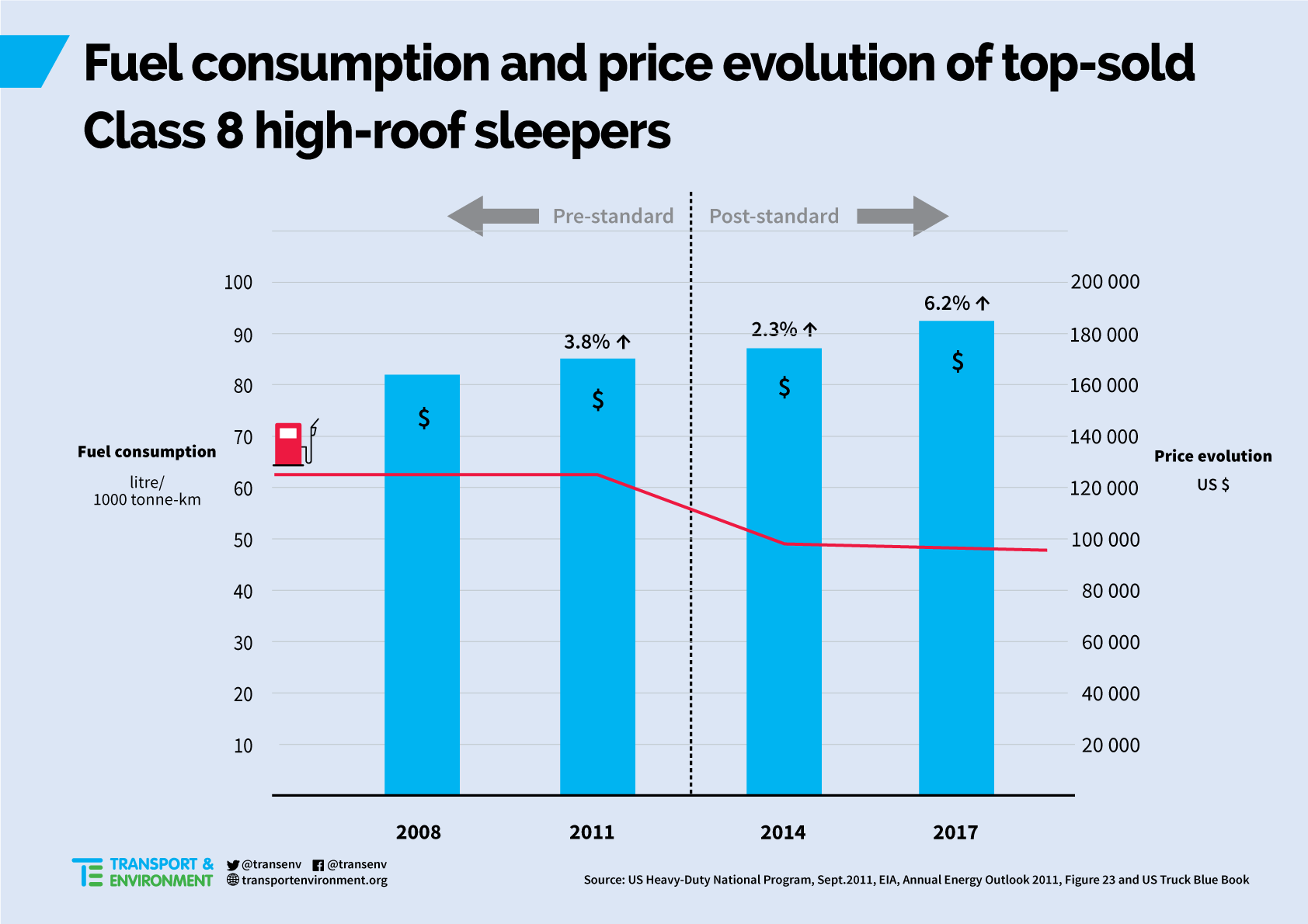
This study shows that, in the period 2008 to 2011, a time before CO2 standards for trucks came into effect in the US, truck prices increased but fuel efficiency remained broadly static. Coming into force in 2011, standards ensured the deployment of fuel saving technologies and brought about a 24% fuel efficiency gain from 2011 to 2017.
Interested in this kind of news?
Receive them directly in your inbox. Delivered once a week.
Taking a year-to-year context, the annual price rise after standards has been $400 higher than before standards but, for this, purchasers got an average additional fuel efficiency gain of $1,400 every year. In detail: new truck sold in 2017 was $8200 more fuel efficient than a 2011 model, which averaged across the six years gives $1366, or to $1400 rounding.
In short, CO2 standards have significantly reduced the total cost of ownership of trucks in the United States of America.
Related Articles
View All
IRU and T&E call for EU framework to unlock semi-private truck charging

European businesses in the transport sector call for EU to maintain stability and ambition on decarbonising heavy-duty vehicles (HDVs)
“Don’t weaken CO2 standards for trucks”, European businesses urge the EU, as they signal strong demand for electric

Are electric trucks cheaper to operate than diesel?
A new T&E analysis looking at major truck markets in the EU