For member states, Dieselgate never happened
It has been more than a year since the European Commission presented its type approval proposals (or TAFR) to reform the current system of vehicles testing following the Dieselgate scandal. Following extensive consideration by the European Parliament and Council of Ministers, the final negotiations to agree the changes are imminent. The Parliament voted its position on 4 April; the Council is expected to agree most technical details at a working group meeting on the 26 and 27 April and reach a final agreement at the Competitiveness Council on 29 May.
Interested in this kind of news?
Receive them directly in your inbox. Delivered once a week.
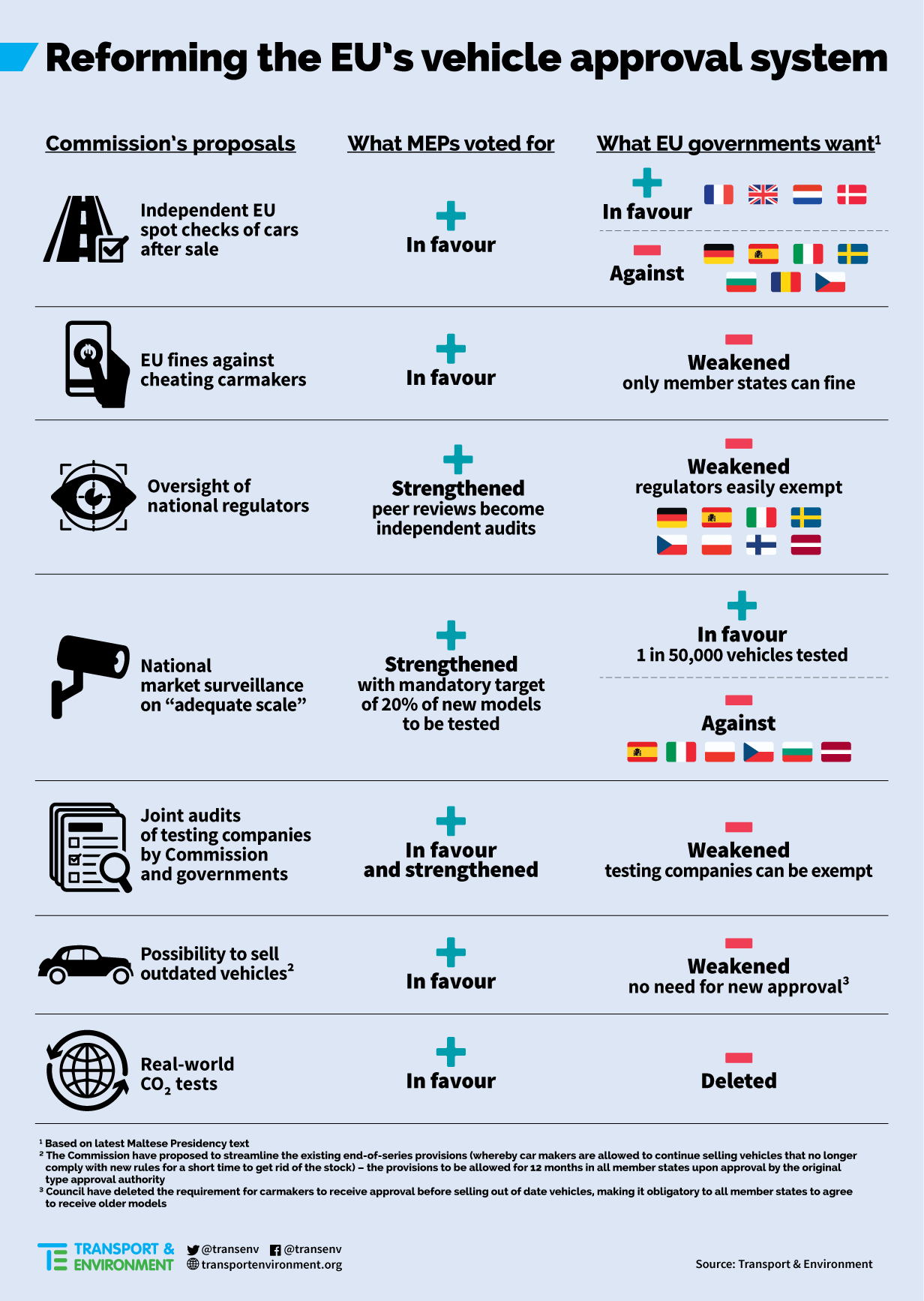
But as member states also hammer out their final position, clear battle lines are being drawn between those seeking to reform the discredited system of car approval and those seeking to retain the status quo. This briefing (which can be downloaded below) and infographic summarise the key position differences between the Parliament and national governments.
Related Articles
View All
Wave of affordable electric cars is boosting consumers' choice: sales of sub-€25,000 models set to rise sevenfold
Electric car choice is expanding rapidly thanks to EU clean car targets, but weakening the 2030-35 targets would put affordable models and Europe’s po...
EV progress report: 'Don't stop me now', the EV transition is delivering
The EU car CO₂ targets are delivering record electric car sales and a wave of affordable models. However, weakening the 2030-2035 target as currently ...

Unlock public EV charging price transparency and competition
T&E position on the revision of the Alternative Fuels Infrastructure Regulation for Light Duty Vehicles