Recycling drastically reduces dependence on imported electric vehicle battery materials
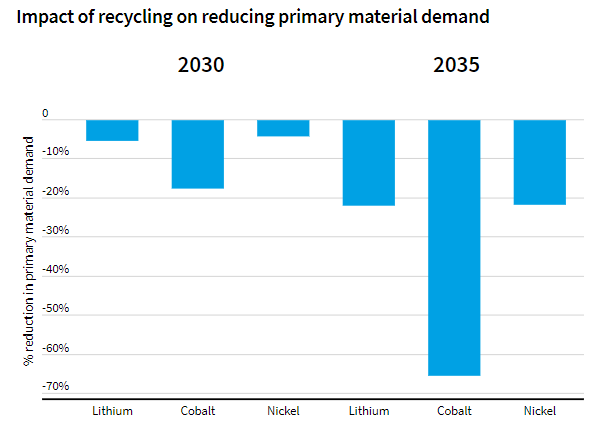
Much of Europe’s raw material needs for electric vehicle (EV) batteries can come from recycled batteries, a new T&E study shows. In 2035, over a fifth of the lithium and nickel and 65% of the cobalt required will come from reused EV batteries. This, combined with battery density improvements, will reduce the impact of extraction and significantly reduce dependency on imports.
Interested in this kind of news?
Receive them directly in your inbox. Delivered once a week.
T&E’s report shows that contrary to the view that EVs will lead to the pillaging of raw materials, once recycling is taken into account, the amount of raw material that is used up – and can’t be recovered – is small.
Under the Commission’s proposed target in 2030, 5% of lithium, 17% of cobalt and 4% of nickel required for EV battery production can be obtained from recycled European EV batteries. In 2035, this increases to 22% of lithium and nickel, and 65% of cobalt as more cars reach the end of their lifetimes.
Lucien Mathieu, transport and e-mobility analyst at T&E, said: “Unlike today’s fossil fuel powered cars, electric car batteries are part of a circular economy loop where battery materials can be reused and recovered to produce more batteries. Recycling of battery materials is crucial to reduce the pressure on primary demand for virgin materials and ultimately limit the impacts raw material extraction can have on the environment and on communities.”
At the same time battery density improvements will also decrease Europe’s need for raw materials. From 2020 to 2030, technological advancements are set to drive down the amount of lithium required to make an EV battery by half over the next decade. The amount of cobalt required will drop by more than three-quarters and nickel by around a fifth, the study shows. This, combined with recycling, will mean that only around 30kg of metals would be lost.

This has a significant impact on resource dependency, says T&E. The EU currently imports 96% of its crude oil supply meaning its dependency on raw materials for batteries will be 10 times lower in 2030 than for oil.
Lucien Mathieu concluded: “With batteries, the EU has the unique opportunity to move away from dependence on raw material imports like it has been for decades with fossil fuels. And with a number of battery gigafactories planned in the coming years, Europe is already set to be self-sufficient in EU-made batteries, even as demand for electric vehicles continues to rise”.
Related Articles
View All
Joint letter on low-carbon steel credits in the review of EU CO₂ emission standards for cars
Creating predictable demand for genuinely low-carbon steel is urgent. If properly designed, low-carbon steel credits can create a lead market for gree...

Drive forward or turn back? Four reasons to vote for a strong automotive package
The coming weeks will be crucial for the future of the EU's car and van CO₂ standards and Clean Corporate Vehicles Regulation — a choice that will sha...

The zombie engine: How Brussels bureaucrats are breathing false life into combustion
If you poured rapeseed oil into a combustion engine and declared it a "zero-emission vehicle," you would be laughed at. But in the EU Parliament, this...