Europe’s imports of dubious ‘used’ cooking oil set to rise, fuelling deforestation
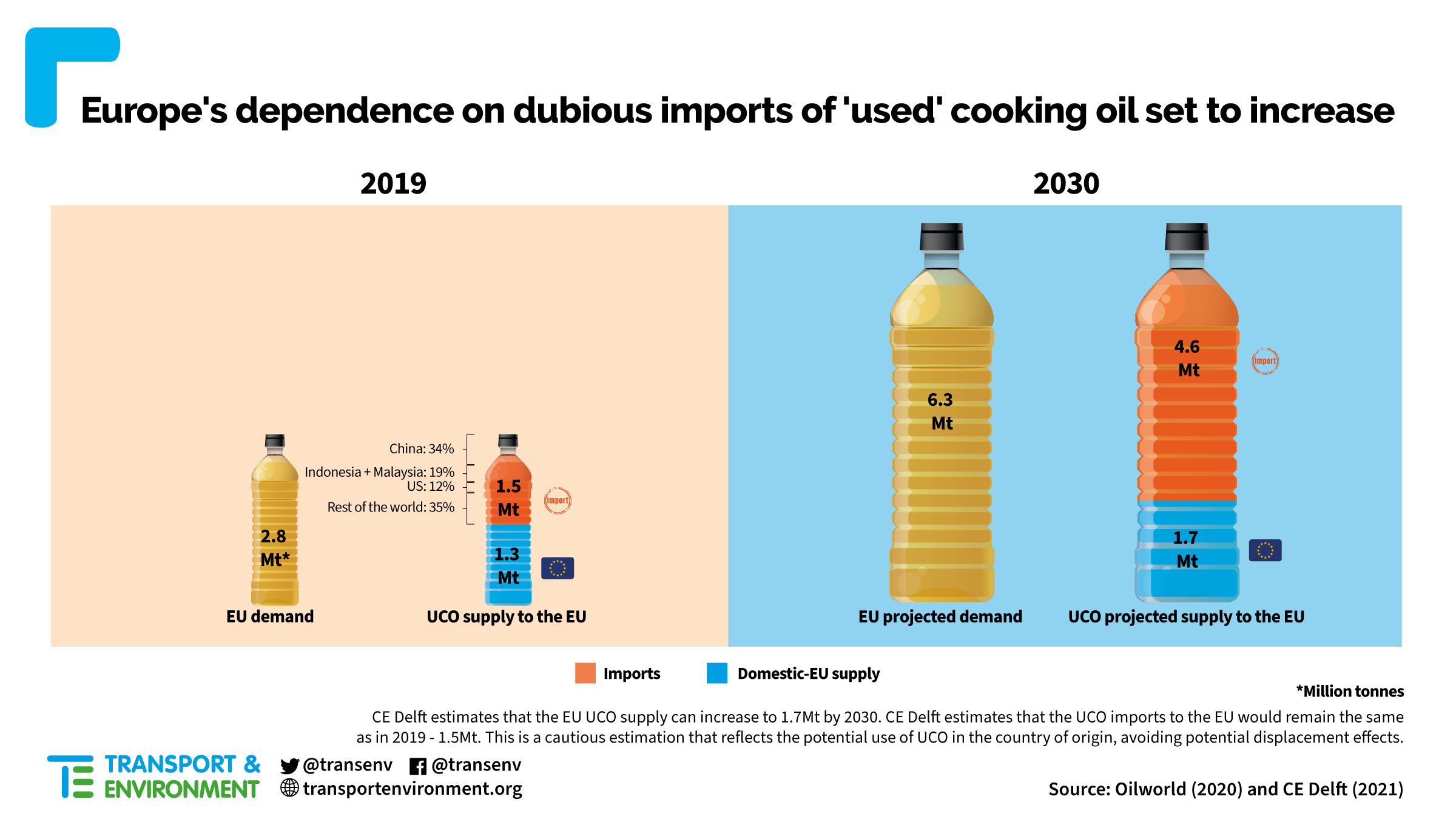
Europe’s demand for used cooking oil (UCO) to power its transport could double in 2030 leaving it increasingly reliant on dubious imports, a new study shows.
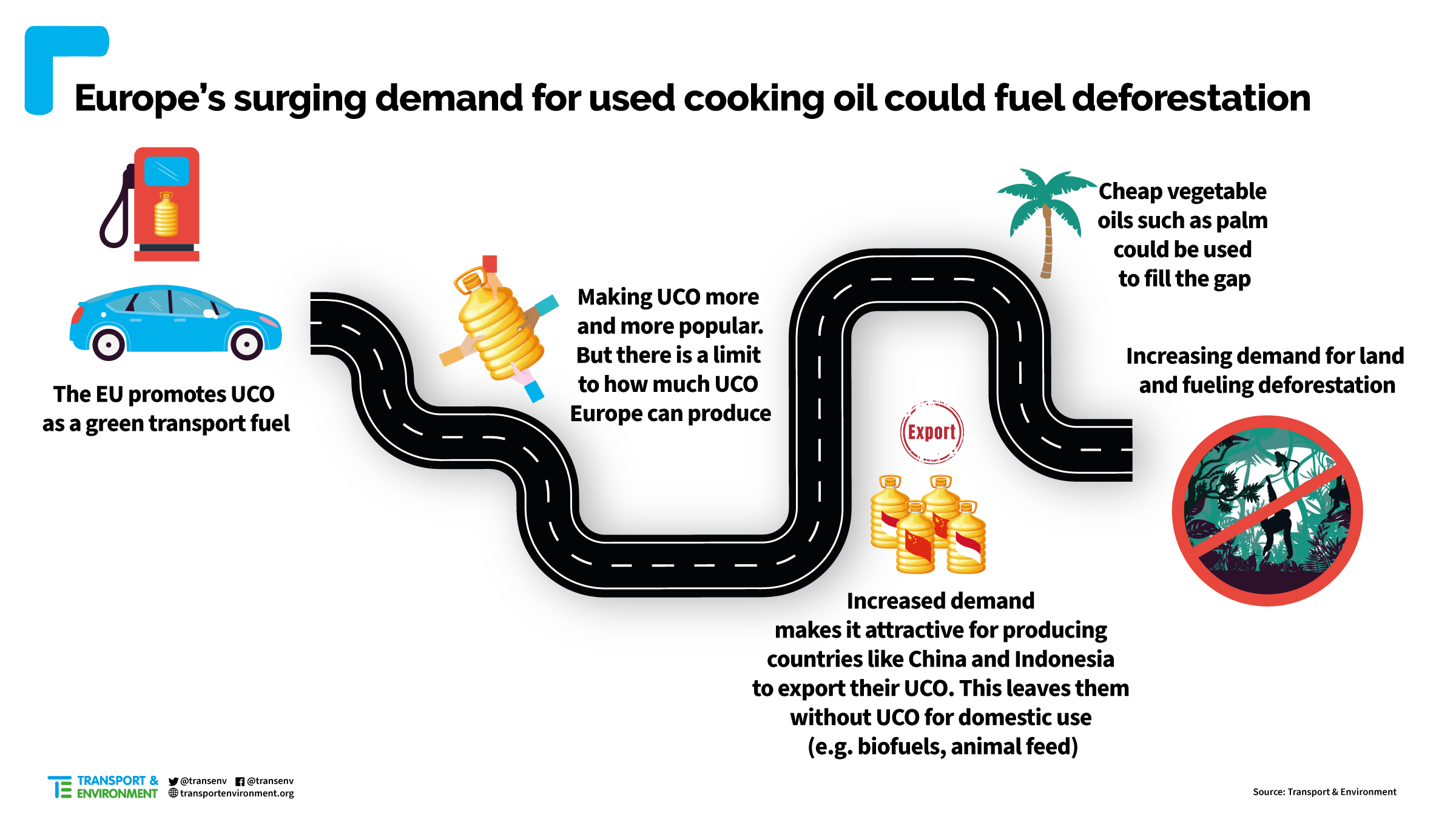
Europe can increase the amount of UCO that can be sourced locally, says T&E, but this is limited by both the capacity of local authorities to collect it and how much used cooking oil Europeans and EU industries can produce.
As UCO is counted double towards national renewables targets under the EU Renewable Energy Directive, it is often traded at a higher price than virgin oil. This increases the risk that virgin oils could be fraudulently mixed with imported UCO. The EU Court of Auditors has said that voluntary schemes cannot guarantee that all the UCO imported into Europe is actually ‘used’. In the past few years there have been a number of allegations of fraudulent practices linked to the UCO biodiesel industry.
Cristina Mestre concluded: “The current EU system for biofuels does not provide certainty that used cooking oil is actually used. The EU should strengthen its verification and monitoring requirements along the supply chain and do regular checks to make sure it is really a waste product and therefore sustainable.”
Palm oil production is one of the key drivers of deforestation in Southeast Asia and increasingly in South America. The EU’s Renewable Energy Directive will be reviewed in June, including the rules that govern renewable fuels in transport.
Related Articles
View All
Grid connection at European ports and airports: solutions to accelerate transport electrification
Imagine buying an electric van for your business, then discovering the cable connecting it to the grid won't be installed for another ten years. That,...

Driving an EV now costs half as much as diesel, new analysis shows
Diesel drivers in Europe are paying €32 more at the pump than at the beginning of the war in Iran. As Europe’s leaders meet in Brussels to discuss how...

Europe paying €200 million a day diesel premium, report shows
Europe is the world’s most exposed region to high diesel prices with drivers paying an additional €30 at the pump