Seven facts about palm oil biodiesel
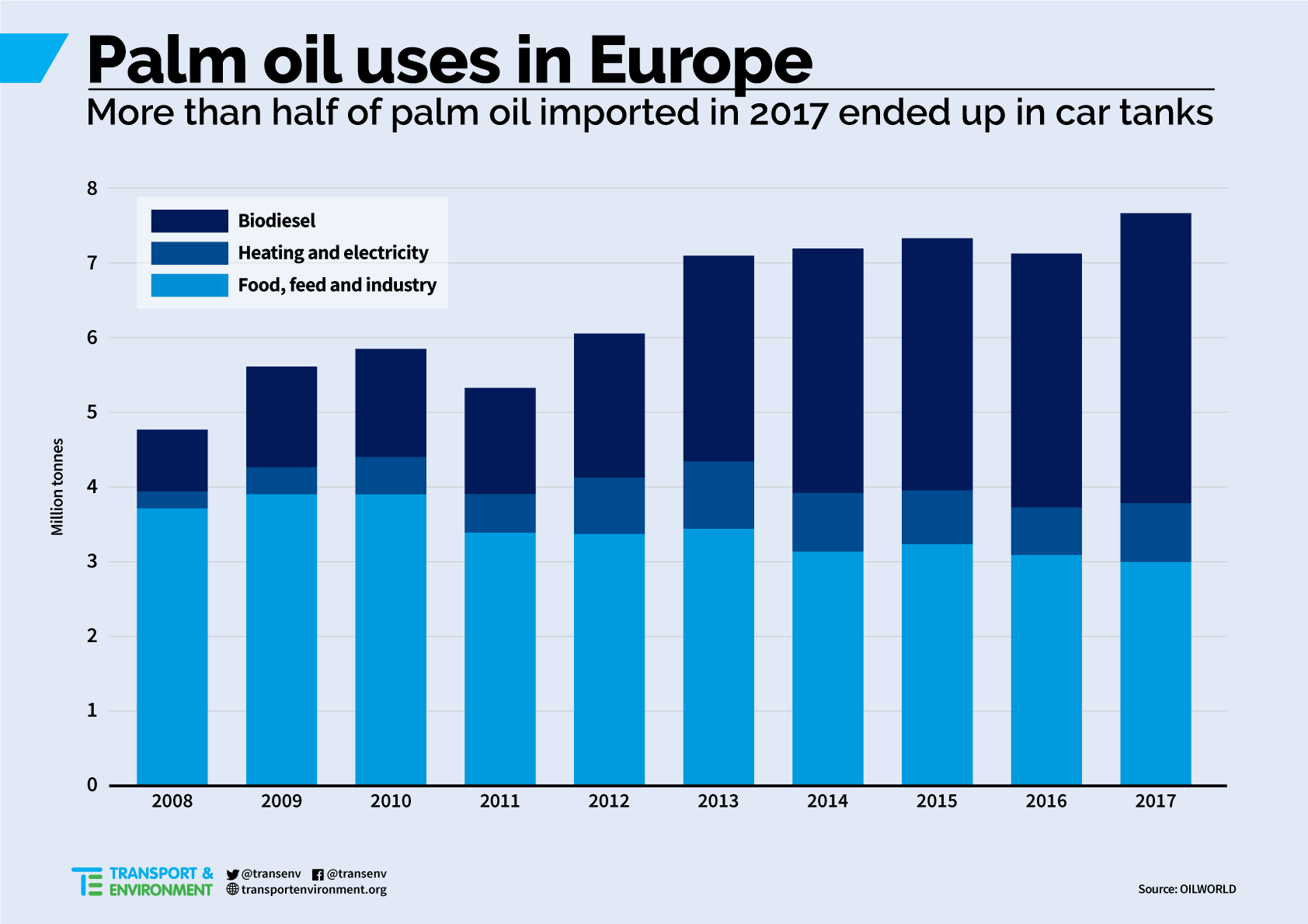
The EU is entering in the final round of negotiations on the REDII. One of the outstanding issues to be agreed between EU Parliament, the Council and Commission is palm oil biodiesel.
Interested in this kind of news?
Receive them directly in your inbox. Delivered once a week.
In January 2018 the Parliament voted in favor of phasing out support to biodiesel based on palm oil as of 2021, which is a step in the right direction. However, this decision is being contested by the Council and also by the palm oil-producing countries – especially Malaysia and Indonesia.
T&E considers that, although the phase-out should be extended to cover other high-emitting crop biofuels, the Parliament position goes in the right direction because of the environmental, social and climate impacts associated to palm oil biodiesel. This briefing outlines the key reasons why the policy support to palm oil biodiesel must end in the EU.
Related Articles
View All
Grid connection at European ports and airports: solutions to accelerate transport electrification
Imagine buying an electric van for your business, then discovering the cable connecting it to the grid won't be installed for another ten years. That,...

Driving an EV now costs half as much as diesel, new analysis shows
Diesel drivers in Europe are paying €32 more at the pump than at the beginning of the war in Iran. As Europe’s leaders meet in Brussels to discuss how...

Europe paying €200 million a day diesel premium, report shows
Europe is the world’s most exposed region to high diesel prices with drivers paying an additional €30 at the pump