7 myths about fuels and electric trucks from the oil and gas industry
To prolong the life of the combustion engine and keep a market for their fuels, the industry has been pushing biofuels and synthetic fuels while trying to discredit electric trucks.
The European Union is currently revising its CO2 standards for heavy-duty vehicles (HDVs). This regulation will irreversibly cut the trucking sector’s dependence on diesel. As a result, the oil and gas (O&G) industry is eager to create room for so-called ‘alternative fuels’ in the new law, in spite of the opposition from most truckmakers. To make their case, the O&G industry has been spreading myths to shed a positive light on biofuels and synthetic fuels and to discredit electric trucks.
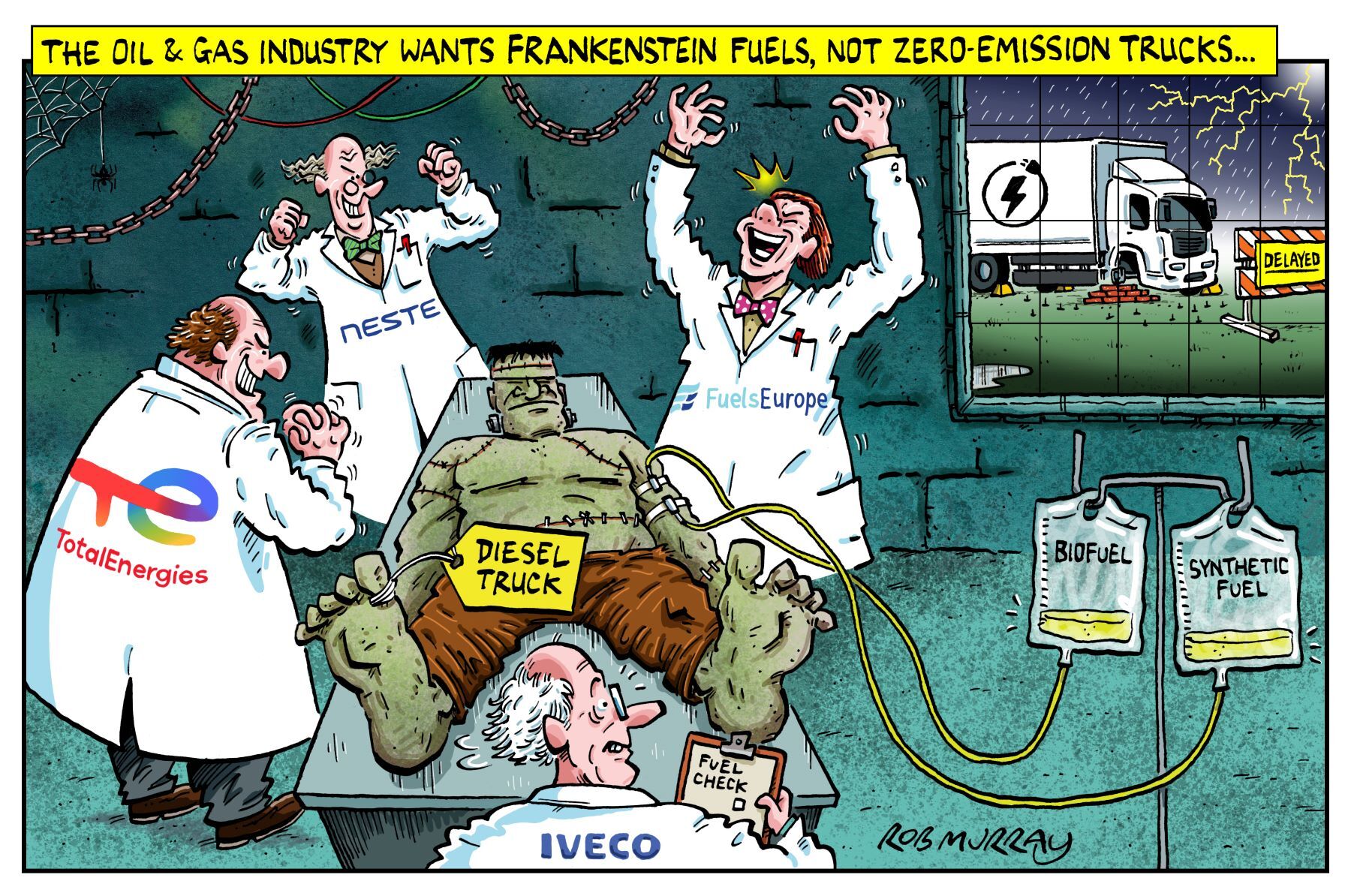
This briefing aims to debunk the most common myths on trucks included in three recent publications from fuels groups: the European Research Institute for Gas and Energy Innovation’s (ERIG) study on renewable long-haul transport (the ReHaul report), Concawe’s lifecycle analysis HDV comparator tool, and UNITI’s compilation of 17 factsheets about e-fuels. We focus on three different types of fuels: e-diesel (a so-called “e-fuel”), Hydrotreated Vegetable Oil (so-called “renewable diesel”, or HVO) and biomethane, as these are the alternatives to zero-emission trucks most touted by the O&G industry.
Related Articles
View All
IRU and T&E call for EU framework to unlock semi-private truck charging

European businesses in the transport sector call for EU to maintain stability and ambition on decarbonising heavy-duty vehicles (HDVs)
“Don’t weaken CO2 standards for trucks”, European businesses urge the EU, as they signal strong demand for electric

Are electric trucks cheaper to operate than diesel?
A new T&E analysis looking at major truck markets in the EU