European shipping will be dependent on fossil fuels beyond 2050, study
EU’s landmark green shipping law not compliant with obligations of the Paris Agreement
The EU’s landmark green shipping law will still leave the bloc dependent on fossil fuels beyond 2050, new Transport & Environment (T&E) analysis shows. The review of the EU’s FuelEU Maritime also shows that EU shipping will fall behind where it needs to be in every decade up to and beyond 2050, meaning the sector will almost certainly overshoot the target of keeping global heating to 1.5 degrees.
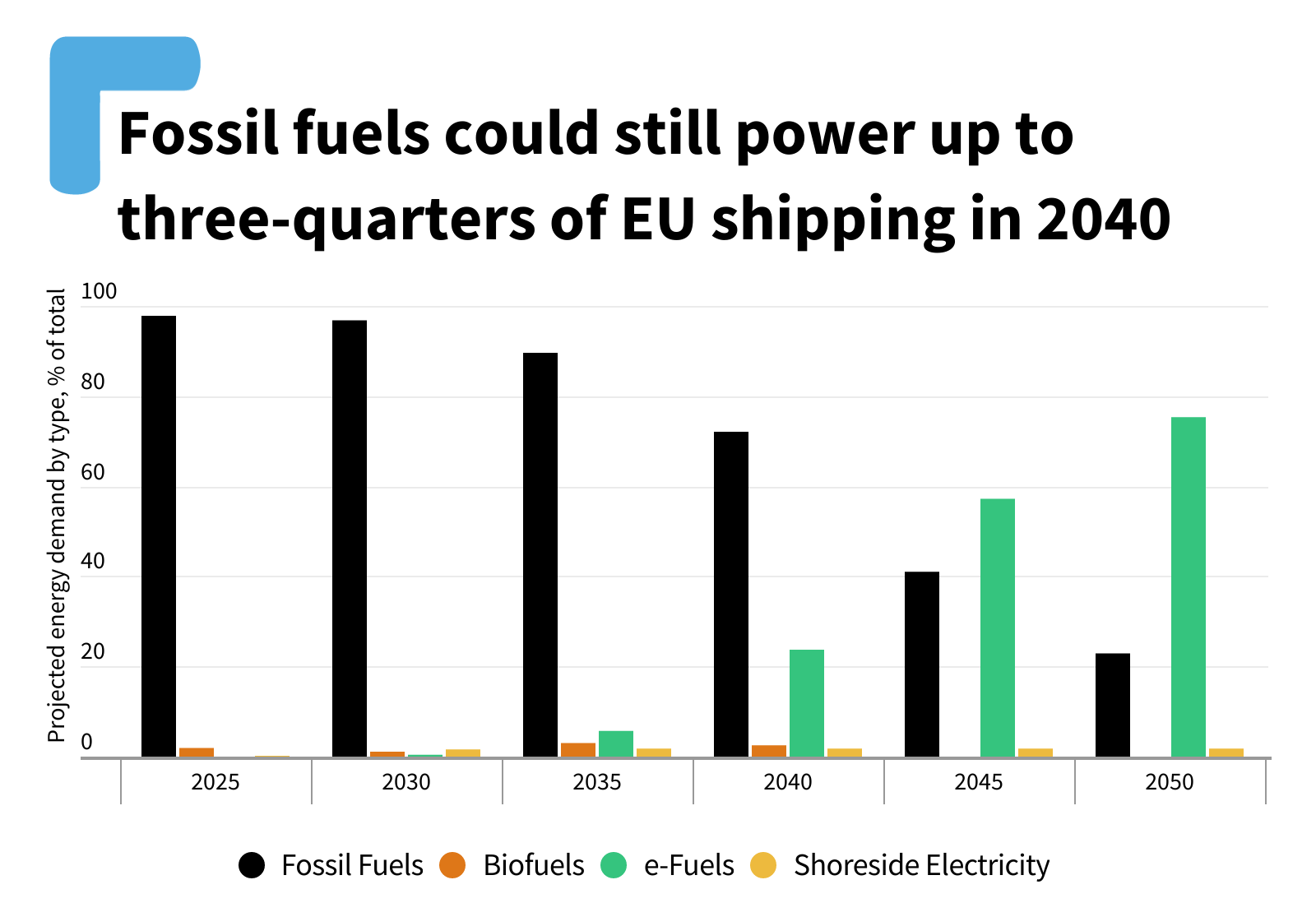
In April this year, the EU passed the world’s most ambitious green shipping law to date, which among other things set a mandatory target for the sector of 2% green e-fuels by 2034. But T&E’s analysis shows that this is not ambitious enough and by 2040 fossil fuels will continue to power three-quarters of European shipping’s energy needs.
Under the current law, 6% of shipping will run on green e-fuel by 2035 and this will rise to 24% by 2040. To ensure the sector decarbonises on time, the share of green e-fuels will need to be at least 18% and 85% in 2035 and 2040 respectively, alongside strong energy efficiency measures.
Alex Springer, shipping analyst at T&E, said: “Last year the EU took a major stride in tackling carbon emissions from ships by introducing the world’s first green fuels mandate for shipping. But in the midst of a climate crisis, what it requires of shipping companies is not enough. The EU’s failure to get shipping to zero by 2050 puts the bloc’s entire Green Deal at risk. Europe’s policymakers must go bolder and revise the targets immediately following next year’s European elections.”