EU backs electrification to make Europe more secure
EU Commission identifies grids as a bottleneck for electrification, promising to standardise vehicle-to-grid (V2G) technology
The EU Commission has announced an electrification target of 46% by 2040 - doubling the current level. Accelerating electrification is crucial if Europe is to reduce its reliance on imported fossil fuels. Prioritising transport - the continent’s biggest consumer of oil - will be essential, says T&E. The Commission’s proposal for EVs to become batteries on wheels will reduce oil imports and bring additional storage capacity to the network. This can reduce costly grid upgrades and decrease the grid bottlenecks that hold back the electrification of all sectors, says T&E.

Launched in response to the recent crisis in the Middle East, the Electrification Action Plan proposes to address the EU's strategic vulnerability to imported fossil fuels—which account for more than half of Europe's energy supply. In an era of geopolitical turbulence, moving toward clean, homegrown and affordable energy is critical for Europe’s sovereignty, says the EU’s executive body.
Transport is Europe’s biggest consumer of oil and is still reliant on fossil fuels for over 90% of its energy. Scaling up electrification of cars and trucks, in particular, is crucial. T&E analysis has shown that Europe’s nearly 8 million electric cars have saved around 46 million barrels of oil in 2025, equivalent to €2.9 billion in avoided oil import costs.
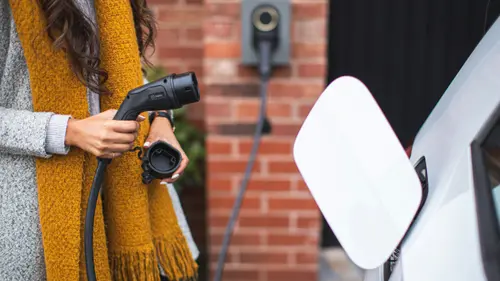
A growing role for electricity in all sectors of the economy- replacing oil and gas - will not be possible without cheap and reliable electricity. The EV as a ‘battery on wheels’ can become the cornerstone for Europe’s flexibility needs. The action plan recognises its important role and proposes ways to realise its potential. This can solve one of the fundamental issues of homegrown renewables of how you can store energy for times when there is little wind or sun, says T&E. One missing element is mandating a bidirectional onboard converter. For T&E, every EV driver should be able to benefit from V2G without having to make the additional investment in an expensive bidirectional wallbox.
Kädi Ristkok, energy director at T&E: “More electricity means more security. It’s as simple as that. From oil crises to extreme heatwaves, Europe’s reliance on fossil fuels is crippling. The Commission proposal is a clear recognition of this. The Commission rightly throws its weight behind a trusted toolbox of heat pumps, household batteries and electric vehicles. But it is also promising to see that it is embracing new green technologies like vehicle-to-grid, which can turn Europe's EVs into batteries on wheels, supporting the clean energy transition of the whole economy.”
The Commission also recognises that port infrastructure is critical for electrifying European transport. The plan states that there should be sufficient charging infrastructure to power at least a third of European battery-electric ferries by 2040 , but falls short of proposing concrete measures for port electrification. Earlier this year, T&E’s research showed that more than half of EU ferries would be cheaper to run on electric by 2035.
However, the Electrification Action Plan must be accompanied by other policy measures. While it proposes solutions to some of the key bottlenecks of electrification, the EU must effectively implement the car and truck CO2 standards, roll out the emission trading system for heating and transport fuels, and strengthen targets in the corporate fleets regulation. “Without them it’s just empty promises,” warns Kädi Ristkok.
Related Articles
View All
Wave of affordable electric cars is boosting consumers' choice: sales of sub-€25,000 models set to rise sevenfold
Electric car choice is expanding rapidly thanks to EU clean car targets, but weakening the 2030-35 targets would put affordable models and Europe’s po...
EV progress report: 'Don't stop me now', the EV transition is delivering
The EU car CO₂ targets are delivering record electric car sales and a wave of affordable models. However, weakening the 2030-2035 target as currently ...
What is the situation with residual values in Europe?
Understanding how Residual Values have evolved and what has driven the change over the last years