Contrails and aviation's other hidden emissions. Aviation’s little-known pollution problem
Contrails and aviation's other hidden emissions
Aviation's little-known pollution problem
Aviation contributes to global warming by emitting carbon dioxide (CO₂) and currently accounts for
around 2-3% of annual global CO₂ emissions. But on top of that, aircraft engines emit other gases as
well as particulate matter that affect the climate and our health. These are called non-CO₂ emissions
and are little known despite their huge impact on the environment. The climate impact of aviation's
non-CO₂ effects is at least as important as the impact of aviation's CO₂ and could triple the
climate
impact of your next flight.
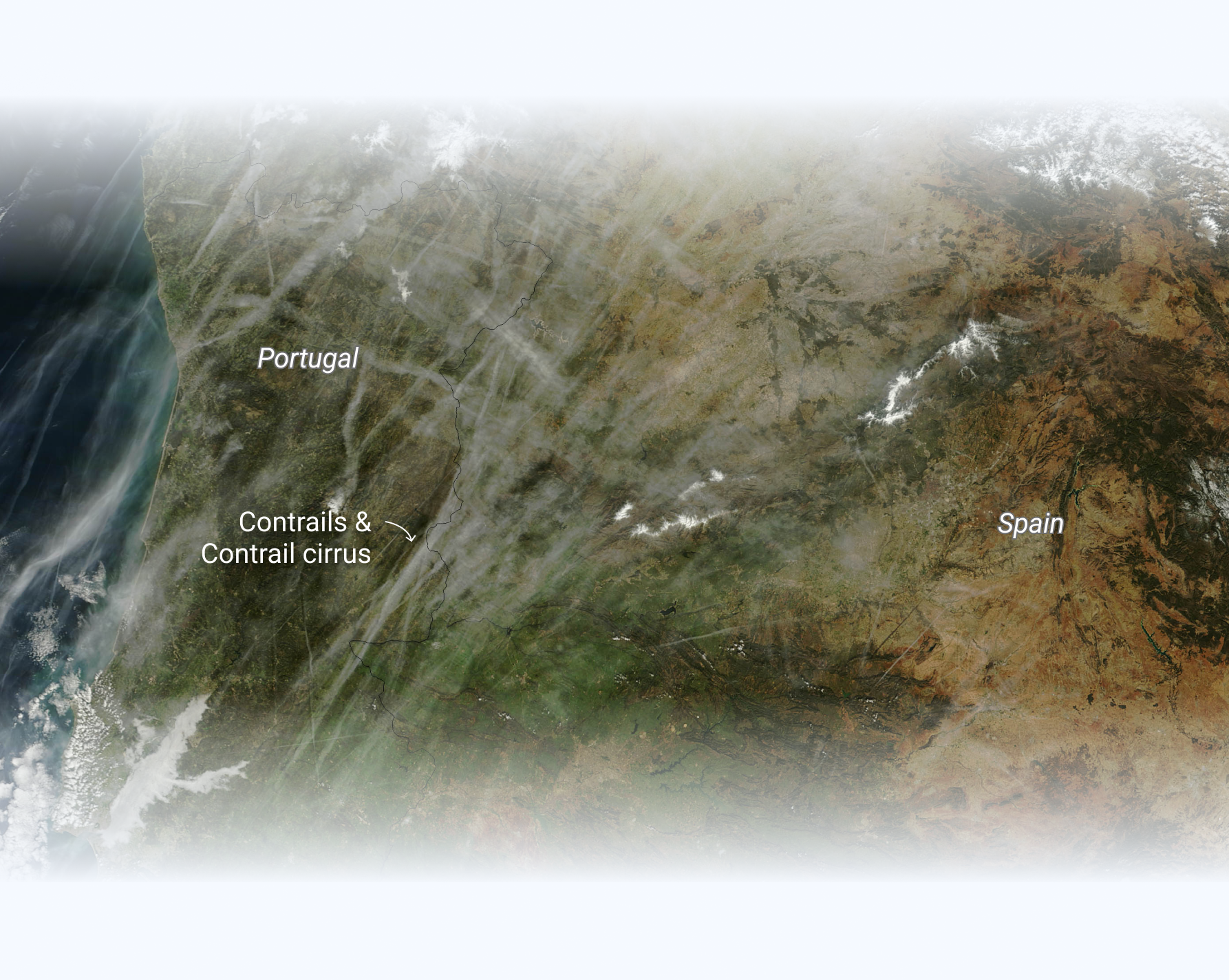
The most famous of these non-CO₂ emissions are contrails. Contrails — the white lines we see
behind planes — contribute disproportionately to aviation's climate impact. Contrails form clouds that
act like a giant blanket. They trap heat that would normally escape from Earth into space,
adding to global warming.
On top of the climate impact, pollutants such as soot, nitrogen oxides and sulfur oxides
negatively impact air quality around airports — with consequences on people's health.
But it is not all bad news. The solutions to reduce contrail warming are relatively easy to implement and
they come at low cost. To date, little action has been taken to address contrails and other non-CO₂
effects of aviation. We
must both address aviation's CO₂ and non-CO₂ impacts if we are to effectively reduce aviation's overall
climate footprint. Find out how this can be done on this page.
CONTRAILS
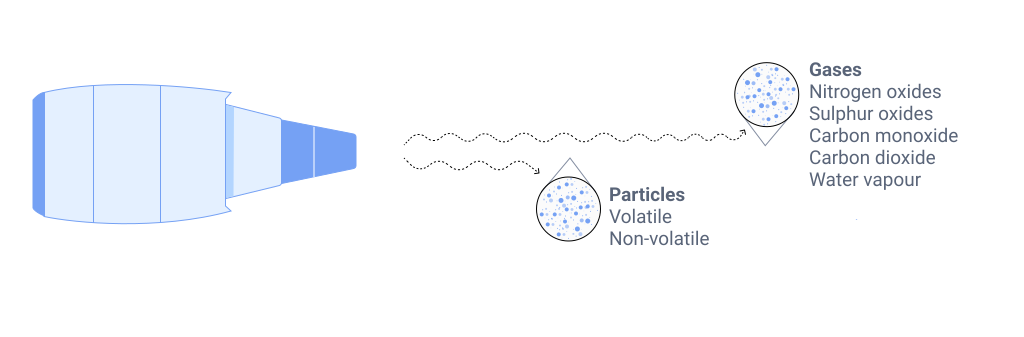
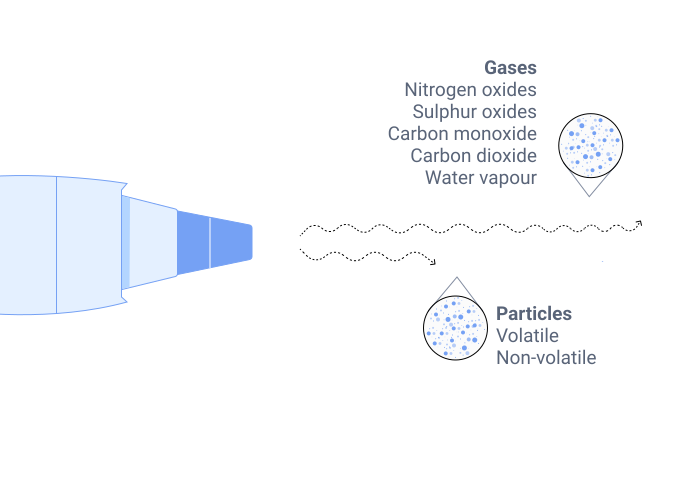
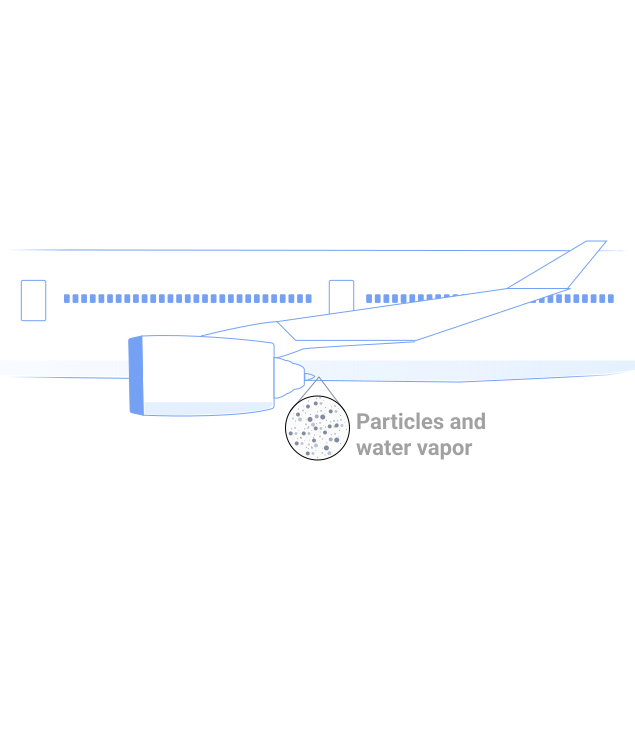
When an aircraft burns jet fuel, it emits water vapour, soot and other particles high up in the sky. If
the air is cold and humid enough, the water vapour condenses around the particles, creating ice crystals
that make up the long white contrail clouds.
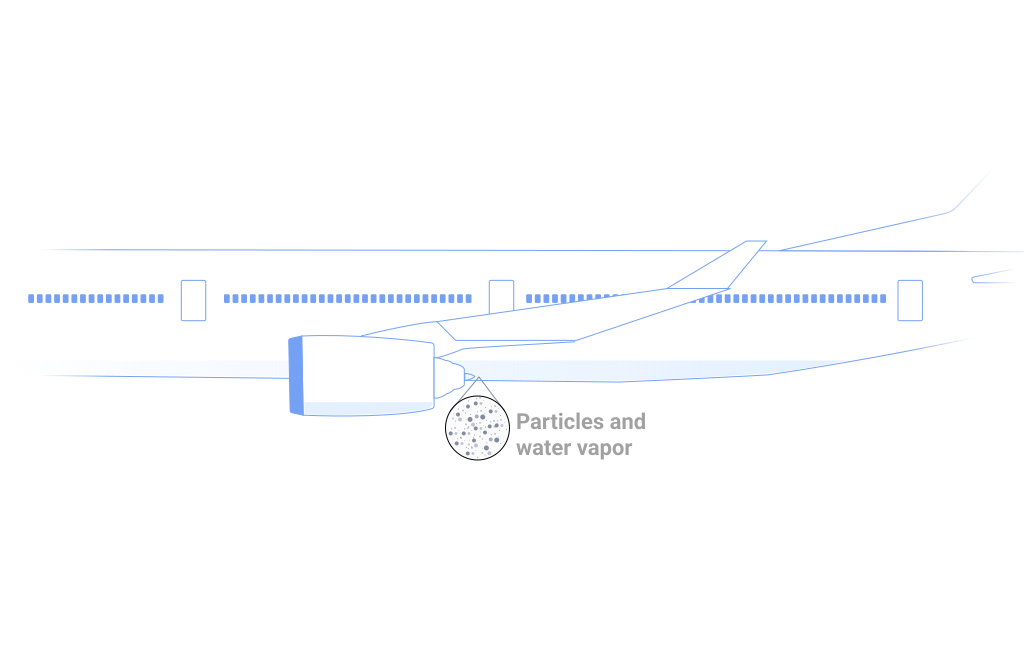
The plane emits different gases including water vapor.
When the plane is at high altitude, the particles from the plane are sometimes emitted in humid areas with low temperatures.
With this mix, the water vapor condenses and it converts into ice particles that generate a
contrail.
Most contrails are short-lived and disappear within a few minutes. However, if a plane flies through
regions with very cold and humid air—known as ice supersaturated regions —the ice crystals in the
contrails can last much longer, forming persistent contrails. Over time, they spread out and form thin,
high-altitude clouds called cirrus clouds. These clouds trap heat and cause noticeable warming.
Contrail clouds are short-lived, lasting only hours to days. However, their warming impact is
significant during that time. CO₂, on the other hand, remains in the atmosphere for centuries,
accumulating as emissions grow and causing long-term warming.
Looking at the average warming caused by a single flight, its warming contrail effect over 20 years is
larger than that of its CO₂ emissions. Over a 100-year period, that same flight's contrail climate
impact would be only 33% of
the CO₂
impact. This happens because contrails and the clouds they form do
not accumulate in the atmosphere like CO₂ does—they disappear after hours or days. Still, looking at
their effects over 20 or 100 years, their warming impact remains significant.
On top of that, planes keep flying every day, so new contrails keep forming and continuously adding to
the warming effect. The problem does not disappear; it is like trying to mop up a floor while leaving
the tap running.
These different numbers explain why estimates of aviation's non-CO₂ climate impact (like contrails)
compared to its CO₂ impact can vary significantly. The exact extent of the climate impact of contrails
is a subject of scientific research. Their impact is influenced by factors such as predicting where
contrails will form, variability in weather models, differences in how aircraft engines generate
contrails, and their interactions with atmospheric conditions.
Despite these uncertainties, there is a scientific consensus that contrail warming has a significant
net-warming climate impact. Yet, little action has been taken to address it. We must both
address
aviation's CO₂ and non-CO₂ impacts if we are to effectively reduce aviation's overall climate footprint.
Even if we meet our greenhouse gas reduction targets, contrail warming must also be mitigated to stay on
track with the Paris Agreement's temperature goals.
WHY DO CONTRAILS WARM THE PLANET?
Unlike lower-altitude clouds, such as fluffy cumulus or thick stratus clouds, contrail cirrus clouds
form much higher in the atmosphere. They are made up of tiny ice crystals rather than water droplets and
are thin and wispy in appearance. While lower clouds often
reflect sunlight back into space and have a cooling effect, contrail cirrus clouds are less
effective at reflecting sunlight but are very good at trapping heat, which contributes to their warming
impact.
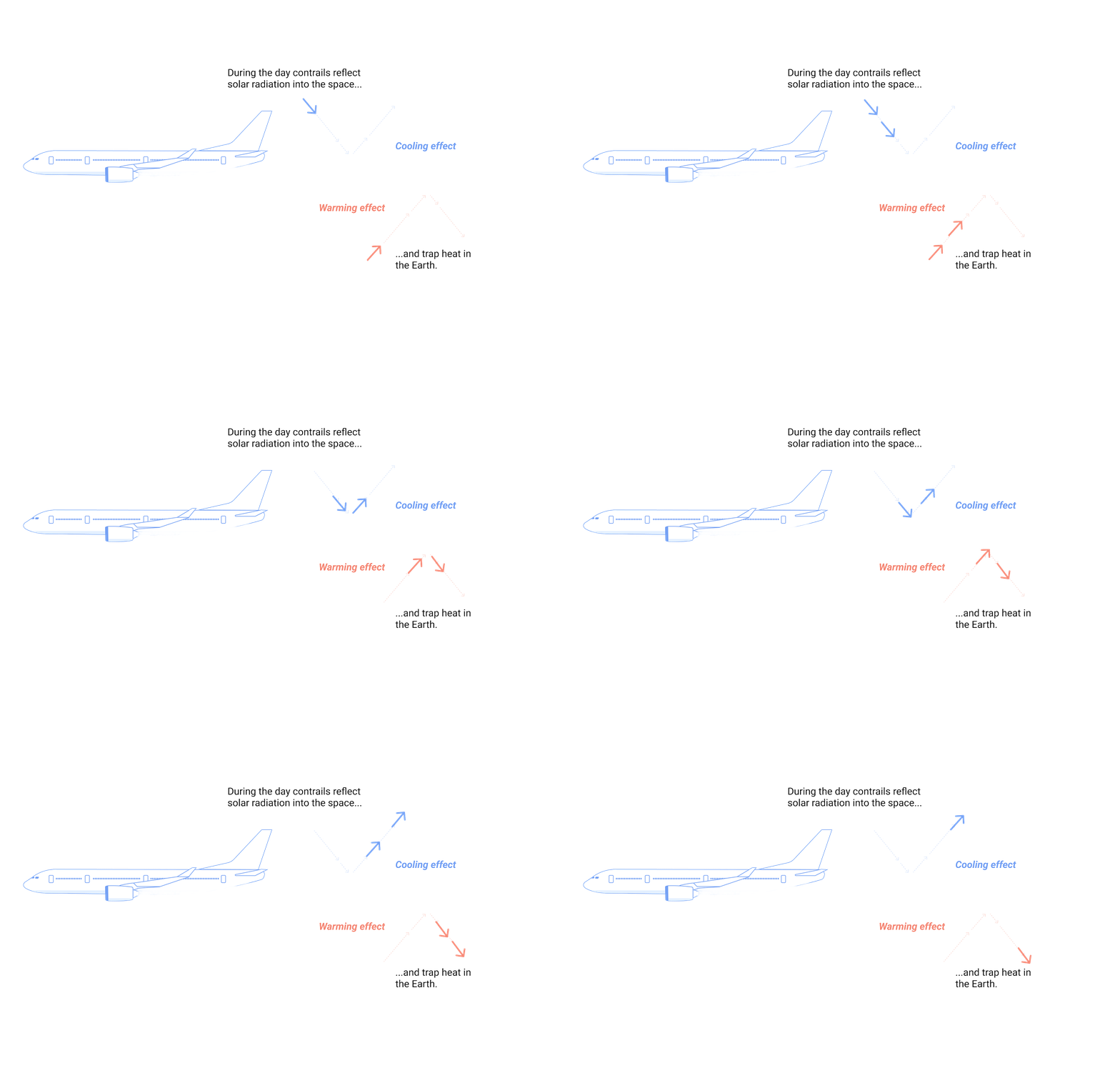
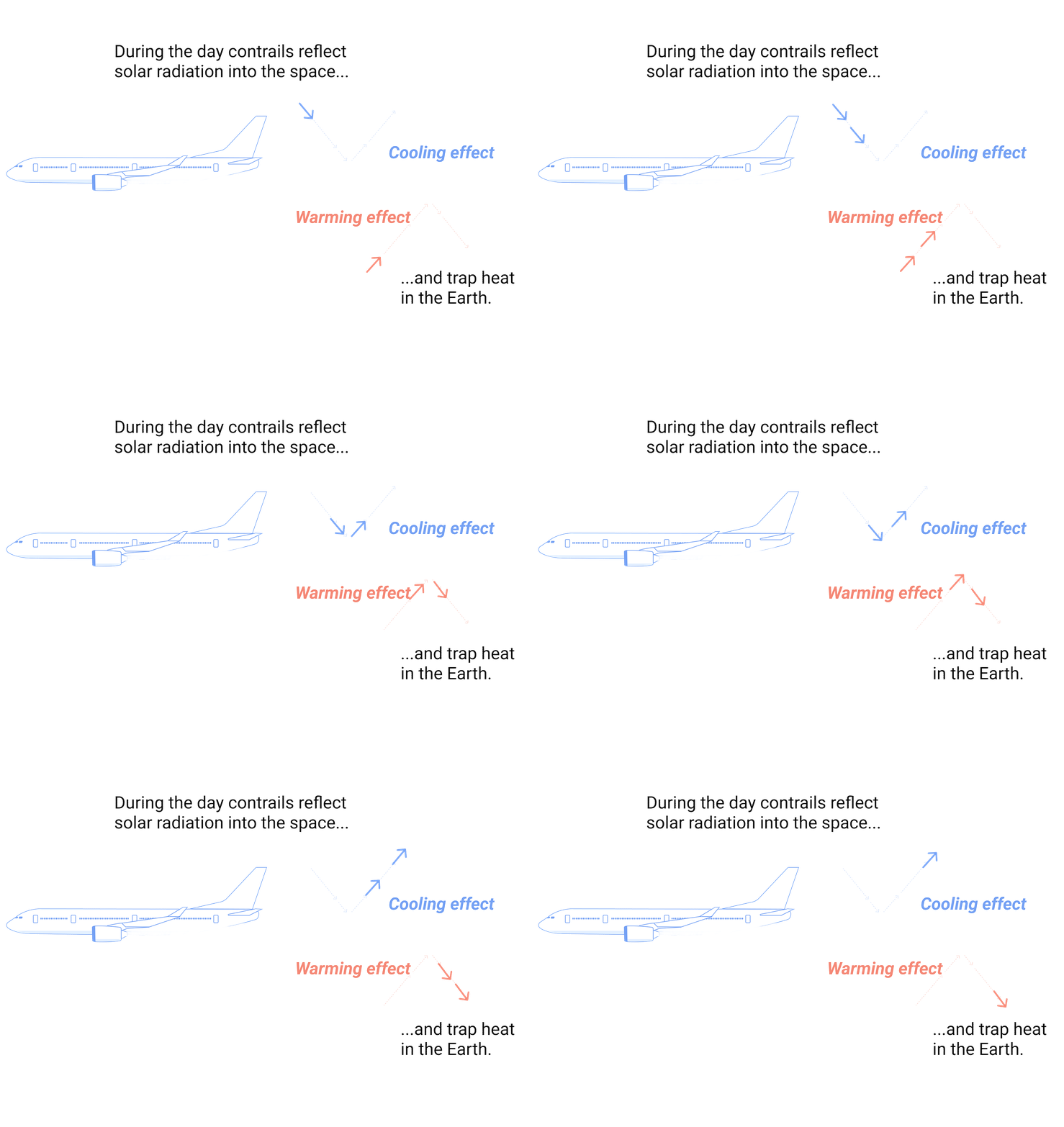
Contrail cirrus clouds can be likened to a combination of an umbrella and a blanket, with their effects
varying depending on the time of day. During the daytime, the contrails function like an umbrella,
reflecting some of the sun's incoming solar radiation back into space, which provides a cooling effect.
Simultaneously, they act like a blanket, trapping heat emitted by the Earth and preventing it from
escaping into space, contributing to warming.
At night, however, when there is no incoming solar radiation, the "umbrella" effect becomes irrelevant.
The contrails then serve only as a blanket, trapping the Earth's heat and amplifying their warming
impact. This dual behavior explains why contrails have a stronger warming effect at night compared to
during the day.
WHERE DO CONTRAILS FORM?
Contrail warming is a highly concentrated issue — less than 3% of global flights generated 80% of
contrail warming in
2019. Indeed, the
climate impact of contrails can be very different for each flight.
Some flights create contrails that only cool the Earth, others make contrails that only warm it, and
some produce a mix of both. However, most flights do not produce persistent contrails at all because
they do not fly through areas of cold and humid air.
3%
of flights generate 80% of contrail warming
Flights from the same airport on the same day may have a very different contrail impact depending on the
time of day — flights in the evening tend to produce more warming contrails. The type of aircraft and
engine, and the routes, also influence the formation of contrails and their impact.
Contrails: A highly concentrated climate problem
On any given day, a small number of flights account for a disproportionate share of contrail-related
climate impact. This visualization shows flights departing from different airports on a day in
July 2019.Red
flightsare among the 5% of flights causing 80% of European contrail warming.
Move the globe to explore destinations, and click on filters to change the departure airport.
Contrail climate impact
5% of flights generating 80% of European contrail warming
Rest of flights
More than half of the warming effects from contrails happen over Europe, North America, and the North
Atlantic, as these areas see the most air traffic at the right altitudes for persistent contrails to form.
In East Asia and China, where aviation has grown quickly, contrails have less of a warming impact. This is
because planes in these regions tend to fly at lower altitudes, where contrails do not form as easily, and
because the warmer air in the subtropics makes it harder for contrails to persist.
HOW TO REDUCE CONTRAILS?
Scientists and engineers have found ways to reduce the warming effects caused by contrails. By
identifying areas where the air is very cold and humid (the conditions that make contrails last a long
time), planes can be rerouted to avoid creating warming contrails. This technique is called contrail
avoidance. Research shows that only a small number of flights — possibly as little as 3% — need to
be
adjusted to avoid more than half of contrail warming.
However, revising the flight plan or trajectory to avoid contrails slightly increases fuel consumption
and leads to higher CO₂ emissions. Therefore, it is important to ensure that the climate advantages
outweigh the disadvantages. Avoiding contrails on a single flight can lead to up to 5% more CO₂
emissions, although the average increase in CO₂ will generally be lower, and even close
to zero in some
cases. Moreover, since only a few flights need to be rerouted, the overall increase in aviation's CO₂
emissions could be less than 0.5%. The climate benefits of avoiding contrails outweigh the damage caused
by releasing extra CO₂.
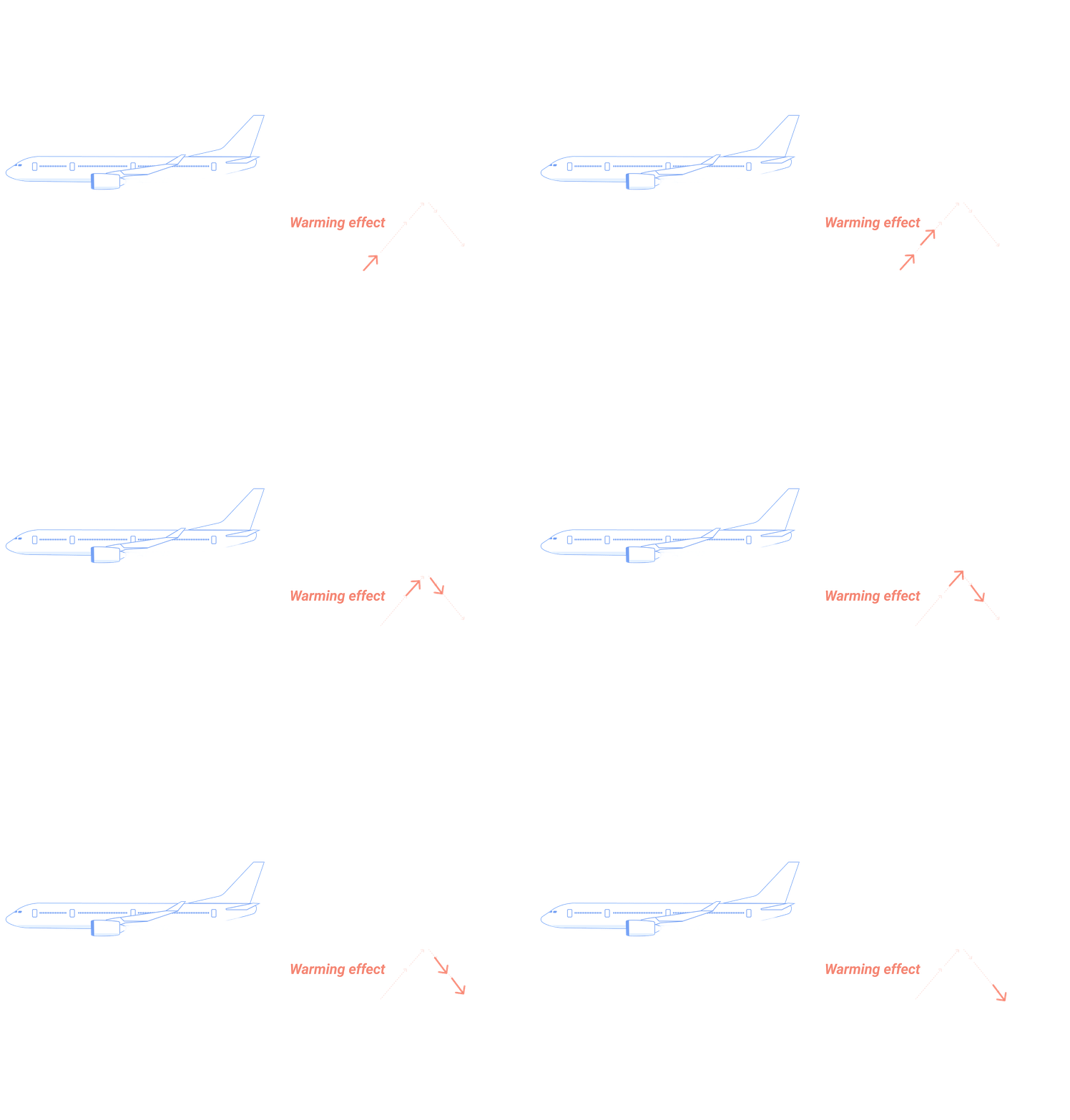
The plane flies its normal trajectory but it will create climate warming contrails.
The contrail impact of this route is high, leading to planetary warming.
By choosing an alternative route, where atmospheric conditions do not lead to the formation
of warming contrail, the climate impact of the flight is much smaller.
This implies that avoiding contrails of the most warming flights is a no-regrets solution for the
climate. The benefits for the planet are much greater than the extra fuel used—at least 10 times
more in very cautious estimates, and possibly hundreds of times more.
And the good news does not stop here. As a climate solution, contrail avoidance is particularly cheap. T&E estimates
the cost of avoiding contrails to be around €4 for a flight ticket from Paris to New York and only about €1
for a flight within Europe. When compared to other CO₂ abatement measures such as renewable fuels or direct
air carbon capture and storage that are usually much more costly, contrail avoidance could be a very
affordable and effective way to reduce aviation's impact on the climate.
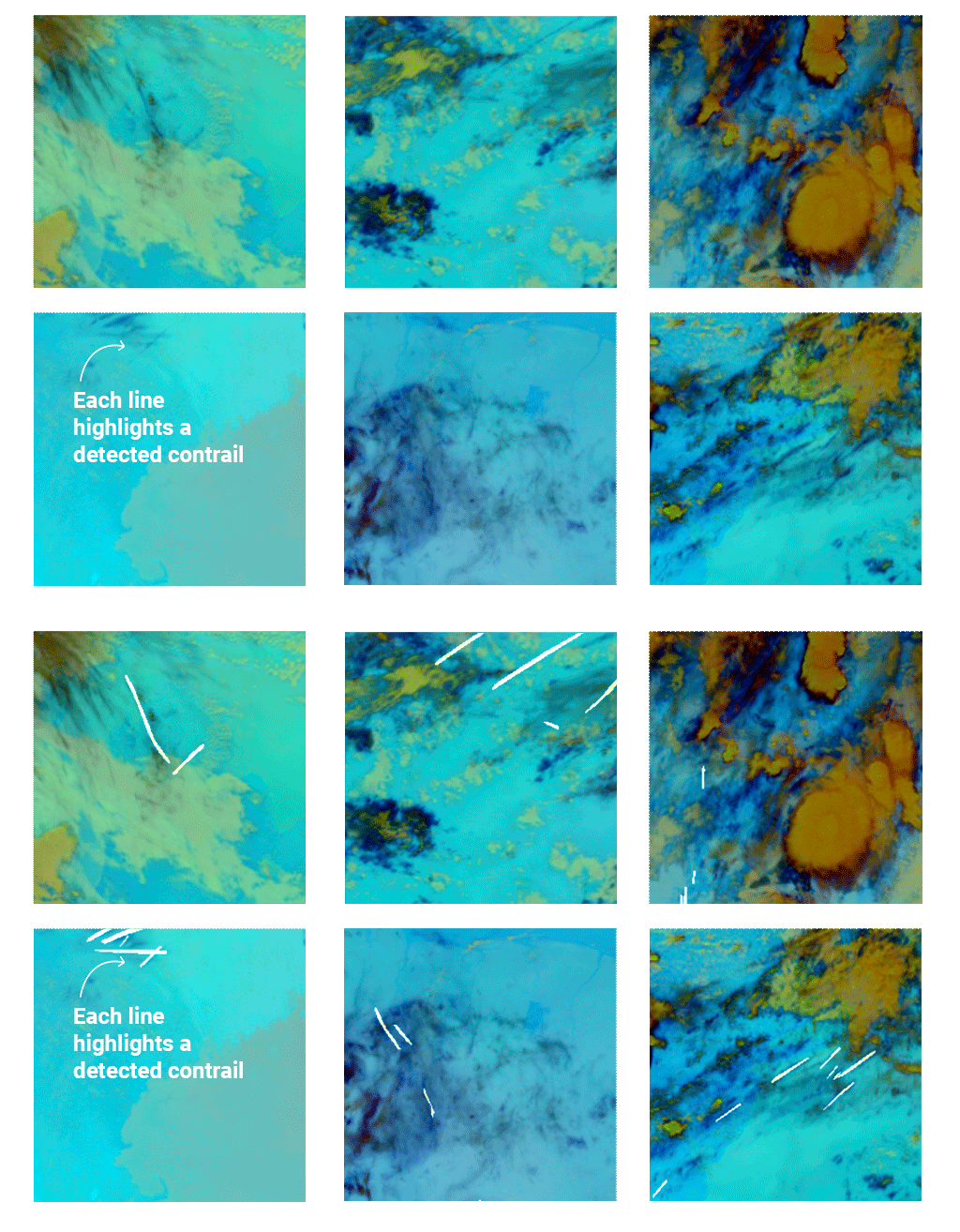
Technology such as machine
learning can play a critical role in contrail avoidance by enhancing the accuracy and reliability
of models that predict contrail formation. Using satellite imagery, machine learning algorithms can identify
and classify contrails with high precision. This verification process ensures that predictive models align
with real-world observations.
The following image shows contrails detected via machine learning on publicly available GOES-16 ABI satellite
images.
ARE THERE OTHER WAYS TO REDUCE THE CLIMATE IMPACT OF CONTRAILS?
Apart from contrail avoidance, cleaner fuels and new engine technologies could also reduce the climate impact
of contrails and, as an added bonus, improve air quality at airports.
Aromatics are a type of chemical found in jet fuel, made up of carbon rings. When burned in a jet engine,
they create tiny particles called soot. Soot makes it easier for contrails to form in cold and humid regions
of the atmosphere. Sustainable
aviation fuels (SAFs), like biofuels or e-kerosene, that more and more
airlines use to reduce their CO₂ emissions also have fewer aromatics. Additionally, conventional fossil jet
fuel can also be
treated to lower its aromatic content at
a low cost. Using fuels with fewer aromatics
results in less soot, which could help reduce contrails, though scientists are still studying their exact
climate impact.
New engine designs, such as lean combustion engines, can also cut down on particle emissions, and especially
soot. This might help
reduce contrail
formation and its climate impact while also improving air quality
around airports, thereby benefiting the health of nearby communities.
OTHER NON-CO₂ EMISSIONS
Contrails are currently considered the most significant non-CO₂ climate impact of aviation. But added to
that, planes emit other pollutants such as soot, nitrogen oxides and sulphur oxides. Most of those
pollutants are emitted at altitudes of up to 13 kilometers, where these emissions affect the climate
directly. Atmospheric transport and chemical reactions can also make these emissions have an impact on air
quality at ground level.
As in the case of contrails, the climate impact of these pollutants is more short-lived than that of
CO₂. However, this does not mean they can be ignored. Just as with contrails, their effects are
continuous
as long as planes keep flying.
Nitrogen oxide (NOₓ) emissions are estimated to contribute to warming today, though they could have a
cooling effect in the future. Because nitrogen oxides interact with other emissions in complex ways,
it is
challenging to determine the best approach to reducing their climate impact. Other emissions, such as soot
and water vapour, contribute to warming, while sulfates have a cooling effect. While not negligible, all of
these impacts are smaller than contrail warming. Finally, some of these emissions might also have a sizable
impact on the climate by affecting cloud formation, but this effect is not yet well understood. Explore the
graph below to understand the impact of aviation's pollutants on the climate, but also on air quality and
health.
Next to their climate impact, the impact of aviation's non-CO₂ emissions on air quality and human health
is
far-reaching and substantial. One of the key pollutants from jet engines is particulate matter (PM),
a broad
term that encompasses particles like soot, sulfates, nitrates (non-volatile particulate matter) and organic
aerosols (volatile particulate matter formed through sulfur oxides). PM also includes ultrafine particles
(UFPs)—tiny particles less than 100 nanometers in diameter, approximately 1,000 times smaller than the width
of a human hair. UFPs are of particular concern because many are released during take-off and landing at
airports with millions of people affected. They can penetrate deep into the lungs and enter the bloodstream,
potentially causing respiratory symptoms, cardiovascular issues, elevated blood pressure, and even long-term
effects like increased mortality and neurological diseases. Despite these risks, UFPs remain largely
under-researched and unregulated, presenting a significant gap in public health protection.
Studies have
shown that
aviation emissions are characterized by high concentrations of UFPs, particularly in
and around airports. And the health impacts of aviation-related UFPs are stark: A CE
Delft study
commissioned by T&E looking at 32 major European airports estimated that around 50 million people living
near these airports could experience significant health effects like high blood pressure, diabetes and
dementia.
Are you breathing in toxic air from planes?
Importantly, the type of fuel used can mitigate these health impacts. In particular, the amount of emitted
PM and UFP critically depends on the amount of aromatics in the fuel, and the sulphur content of the fuel.
Replacing conventional jet fuel with hydrotreated jet fuel, which has very low levels of sulfur and
aromatics, could reduce UFP emissions by up to 70%. This demonstrates the critical role of cleaner fuels in
addressing aviation's impact on public health.
Understanding and addressing these health risks is essential for mitigating aviation's broader impacts.
While much of the focus in aviation decarbonization efforts has been on reducing CO₂ emissions,
improving
fuel quality and addressing non-CO₂ pollutants must be prioritized to protect the health of communities
living near airports.
Recommendations
Whilst scientific research continues on better understanding the impacts of contrails and other
non-CO₂
effects of aviation, action can be taken now to start reducing these effects. Most importantly, they
must be included in climate legislation if we have any chance of change. The following section looks
at
what can be done at EU level, but global action is needed as well.
I. Development of a strong regulatory framework
Non-CO₂ emissions must be included in EU climate policies and integrated into existing regulations
like
the EU's climate targets, the carbon market for aviation (the EU ETS) and air traffic legislation
(Single European Sky). A clear framework will drive innovation, improve air quality, and support the
shift to net-zero aviation.
II. Monitoring contrails
In 2025, the EU started monitoring non-CO₂ effects of aviation on intra-EU flights. This is key to
tracking aviation's non-CO₂ impact. Expanding it to cover all flights departing the EU by 2027 - as
originally intended - will improve regulations, scientific models, and international cooperation and
can
serve as a basis for the proposed legislative framework for non-CO₂ emissions.
III. Advancing technology for contrail reduction
Better weather forecasting and humidity sensors on aircraft and satellites are needed to better
predict
and avoid contrails. As technology improves, equipping all aircraft with these tools can become
standard.
IV. Supporting early adopters
EU funding should prioritize airlines and manufacturers adopting contrail avoidance technology,
including satellite monitoring and fleet retrofits. Incentives for airlines performing contrail
avoidance will speed up industry-wide adoption.
V. Boosting transparency for travelers
A Flight Emission Label should include non-CO₂ impacts, helping passengers choose greener flights.
Greater transparency will push airlines to invest in cleaner solutions.
VI. Adjusted air traffic management
Air Navigation Service Providers (ANSPs) are imminent actors in contrail avoidance by allowing
airlines
to do contrail avoidance by adjusting flight planning and rerouting. The EU should integrate non-CO₂
targets into air traffic policies.
VII. Better weather data & coordination
Stronger collaboration between meteorological services and Eurocontrol will improve contrail
forecasting. Standardized EU-wide protocols will help airlines plan cleaner flights.
VIII. Cleaner jet fuels
Low-aromatic, low-sulfur fuels can contribute to the reduction of contrails and air pollution. The
EU
should update outdated fuel standards to promote cleaner alternatives while SAF production scales up
to
realize the benefits already.
The data used for this story is based on T&E (2025), RMI (2024). The contrail data is taken from Teoh et al.
(2024) for flights in the year 2019. The climate impact of the other non-CO2 emissions is based
on Lee et
al. (2021). The infographic on aviation’s non-CO₂ effects other than contrails is inspired by
Fig. 1 in Lee
et al. (2021). The population density data is taken from Schiavina M., Freire S., Carioli A.,
MacManus K.
(2023). European Commission, Joint Research Centre (JRC) for the year 2020. Contrails image from the NASA
observatory. Publication date: March 3, 2025.